Why croquet courts close every spring
Clubs across Queensland are closing their courts for spring renovation. Here is what the work involves, and why it matters.
Croquet courts are closing at clubs across Queensland this spring. At Burleigh Heads Palm Beach, the courts are under renovation right now. The club's own story begins "Hoops on holidays!" and asks members to watch the club's page for news of reopening. Bribie Island will shut its lawns from Monday 30 November to Friday 18 December. At Wynnum, the club said on 4 November that groundsman Troy has been scarifying the lawns.
It happens every year, and every year some members wonder why. A court builds up a layer of dead grass, its soil packs down hard, and small humps and dips appear. Renovation fixes all three.
Eildon showed this season just how much work is involved. The club planned to close its four lawns from Monday 21 September to Monday 19 October. It engaged "a professional lawn maintenance company" for "heavy scarifying, levelling, coring and topdressing". The club allowed about a month for the lawns to recover, with greenkeeper Rino looking after fertilising and watering. Play was planned to restart on Tuesday 20 October, the same morning as the club's Volunteer Morning Tea.
Mahjong carried on, and the club used the time for a spring clean and stocktake. By 13 October, with thanks to "all of Eildon's volunteers", the lawns were "almost ready to be played on".
The quantities can be startling. In December 2020, Toombul raked 300kg of thatch off one lawn and 250kg off another in a single day. In early 2023 its contractor found 20 cubic metres of sand for the top-dressing. Bribie planned about 10 days of closure in 2025. Windsor, in its first summer after the 2022 floods, took about eight weeks from its first scarify on 12 December to reopening on 4 February 2023. If you want to see the whole job on one page, every step in order, read the ClubHub guide Renovating Your Courts.
Queensland courts are couch grass, and couch grows fastest in late spring and early summer. Clubs wait until it is growing strongly, so it heals quickly, and try to finish before the wet season peaks. Some rain is welcome, though. A loose, freshly sanded surface needs water to settle.
That is nothing new. In November 1928, Toowoomba called off a day's play because its lawn was still loose after top-dressing. The lawn "only wants good rain to contract the surface," the Toowoomba Chronicle reported. Back in 1913, Maryborough United closed from December while its courts were top-dressed, reopening in April 1914 with the courts "now in excellent condition".
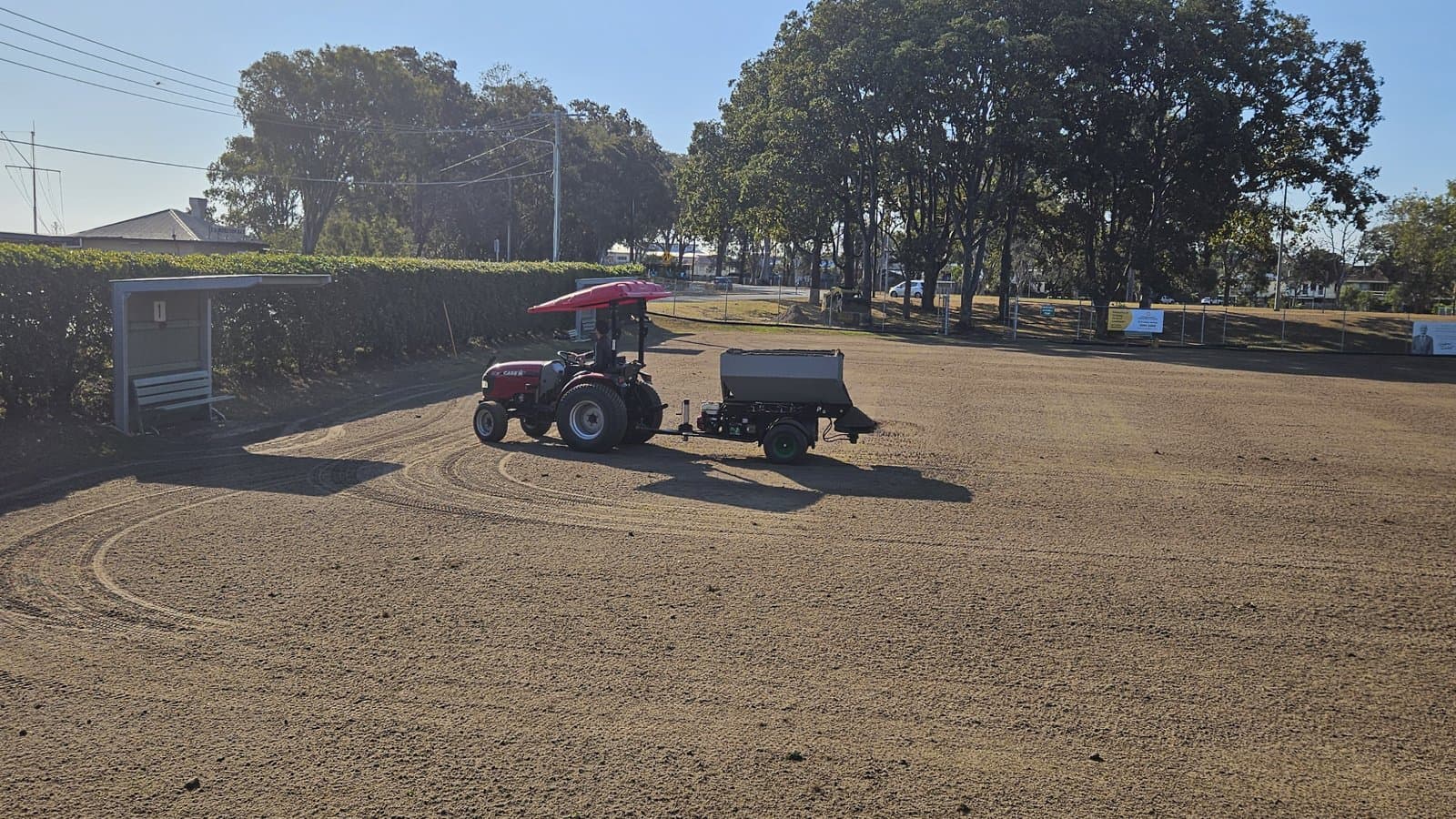
First the grass is mown very low, leaving it brown and stripy. Then the scarifier's blades rake out the thatch, the layer of dead grass that makes a court soft and slow. The court is left torn up, with rows of raked debris. The guide Scarifying explained shows why it comes up so brown. Wynnum told its members plainly: "Although the lawns may look a little rough immediately after scarifying, this is all part of the process."

Windsor: a walk-behind scarifier beside a freshly scarified brown strip, August 2026 (Windsor Croquet Club)
Coring follows, with a machine pulling small plugs of soil from the court so air, water and roots can get in. Coring explained covers why the holes matter and what happens to the plugs.

Eildon: core holes and soil plugs along a strip of court, October 2026 (Eildon Croquet Club)
Then a thin layer of sand is spread and worked in, filling the holes and smoothing small dips, while humps and hollows are found with a long straight bar and fixed. Top-dressing and levelling explains the sand and how low spots are found.
The court is not dying. Soon after the work at Toombul in 2023, Hedi Trask said, "The lawns are already looking as if they haven't been done, so much grass."

Merthyr: a court pale with fresh sand after top-dressing, January 2021 (Merthyr Croquet Club)
When play returns, expect the courts to run slow. The surface is soft and the sand has not settled. Mowing, rolling and rain firm it up. After Wynnum's work in the 2024-25 summer, the club noted, "The speed of the courts will take a bit of getting used to, but that is not a problem."
Renovations lean on a handful of people: Eildon's greenkeeper Rino, Wynnum's groundsman Troy, and Wayne, who looks after Toombul's lawns. Toombul's story says of him, "He just loves those lawns." Volunteers pitch in too, such as Windsor's Scarifying Team, and professional crews bring the heavy machines.
Some clubs have had grants. Eildon's story on its lawns makeover thanked the City of Moreton Bay, "who generously granted us funds". Toombul's 2023 top-dressing story said, "We've used the grant money," without saying what for.
Neighbour clubs help as well. While Eildon was shut, Toombul and Windsor welcomed its players, Toombul at its Wednesday and Saturday morning social days and Windsor on Wednesday and Saturday afternoons. Choosing dates, telling members and finding play elsewhere are all covered in Planning a renovation closure.
Bribie shows what steady care can do. Writing in 2025, Gwen Connolly said the club was grateful for the difference professional greenkeeping had made: "Before 2024 the courts were a headache, but now the club has five well-grassed lawns, no bare patches..." Ipswich finished its work in March and said, "We are loving the fresh lawns!"

Get HOOPLA! in your inbox
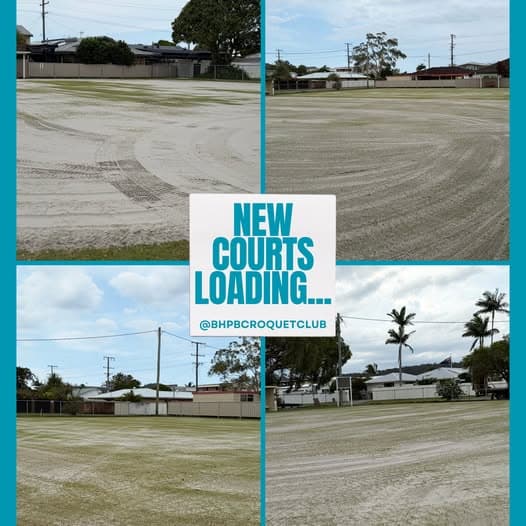
Burleigh Heads Palm Beach courts under renovation
The courts at Burleigh Heads Palm Beach are being renovated and will be back better than ever soon. Members are thanked …
State AC Team announced
Congratulations to the players named in the 2027 State AC Team Men Women Shane Davis …