Who was Mrs Gibson & What did she do for croquet?
We needed to find out what Mrs J Gibson's first name is. Turns out it doesn't even begin with J!
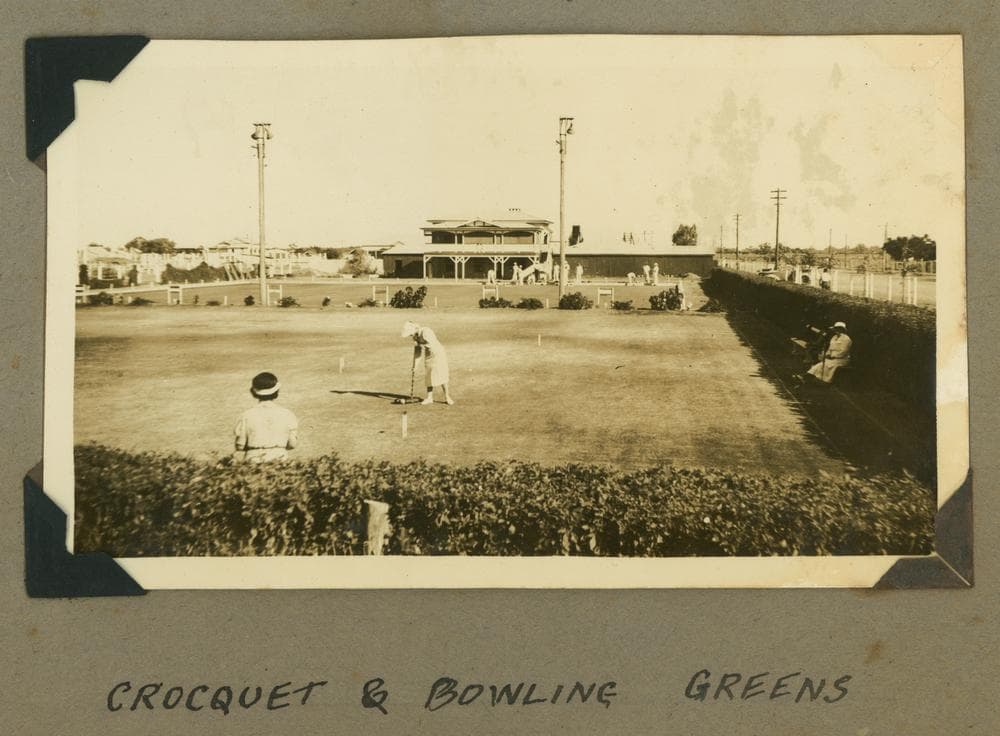
his weekend the Gibson Medal is played for the sixty-third time, on the beautiful lawns of McIlwraith Croquet Club.

The Gibson Medal began in 1961. It is named after Mrs J Gibson, a leading administrator in Queensland who played a key role in the formation of the Australian Croquet Council as well as helping administer charitable causes around Queensland.
It isn't an easy thing to establish what Mrs Gibson's first name is. On the honour boards she is Mrs J Gibson. CAQ's list of past presidents named her Jean. But as we will find out her real name doesn't even begin with J.
So how did this happen?
But first...
The first newspaper advertisement for croquet in a colonial paper appeared in Sydney in 1861, though South Australia claims play at Angaston earlier still. North Adelaide formed the country's first club on record in December 1865.
The game arrived as a respectable amusement for people with lawns, and in Brisbane that meant exactly who you would expect. The Governor of Queensland told McIlwraith's centenary that Brisbane's first ground was in the Botanic Gardens in 1865, hosted by Governor Bowen.
The earliest croquet court we have a photograph of is the lawn at Government House on George Street, on the same rise above the river, in 1869.
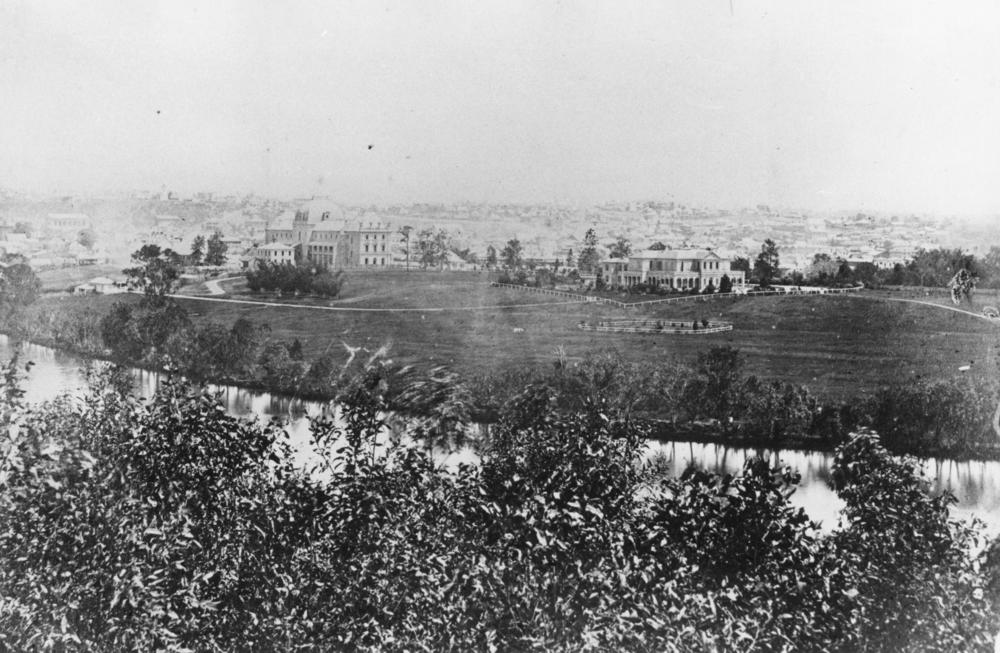
The croquet ground at Government House on George Street, Brisbane, in 1869.
State Library of Queensland (public domain).
The earliest Queensland newspaper notice I found is an 1878 advertisement in the Brisbane Courier for a "Lawn Tennis and Croquet Club".
For a long stretch the two games shared the same lawns and the same afternoons, which is why so many photographs from the period show mallets and racquets in the same group.
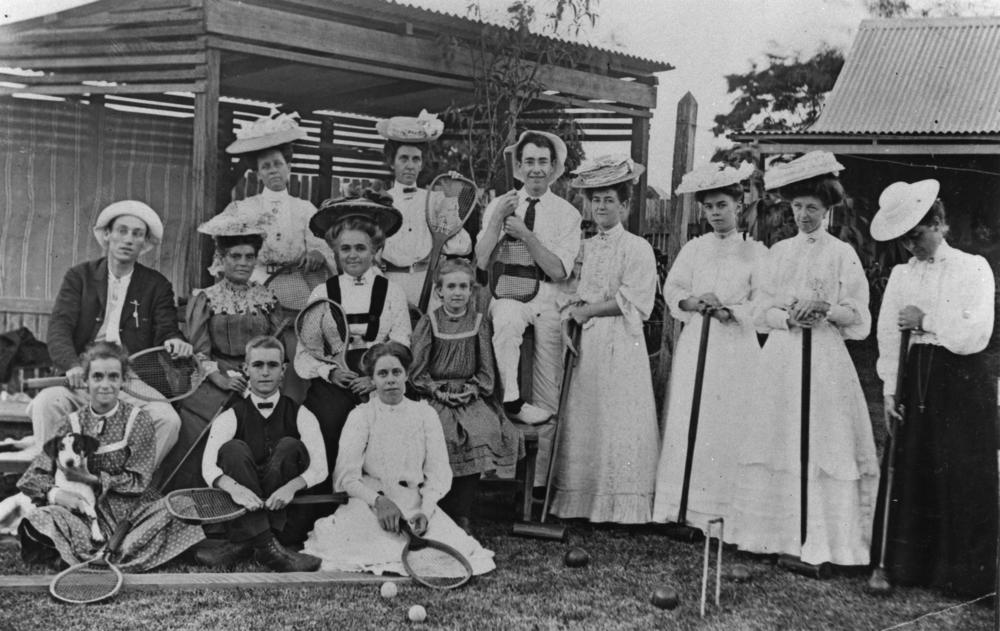
Tennis and croquet players in Queensland, somewhere between 1900 and 1910, dressed for the occasion.
State Library of Queensland (public domain).
Clubs proper came with the new century. Ipswich, South Brisbane and Toowoomba, Rockhampton and East Brisbane, Merthyr, Graceville, McIlwraith, Windsor and Stephens.
By the time the Queensland association came together in 1922, croquet in the Sunshine State was a network of suburban and regional clubs, run very largely by women.
In this era women not only ran croquet, but the Red Cross, the church auxiliaries, the children's homes. If women weren't allowed in the boardrooms they were making a difference elsewhere.
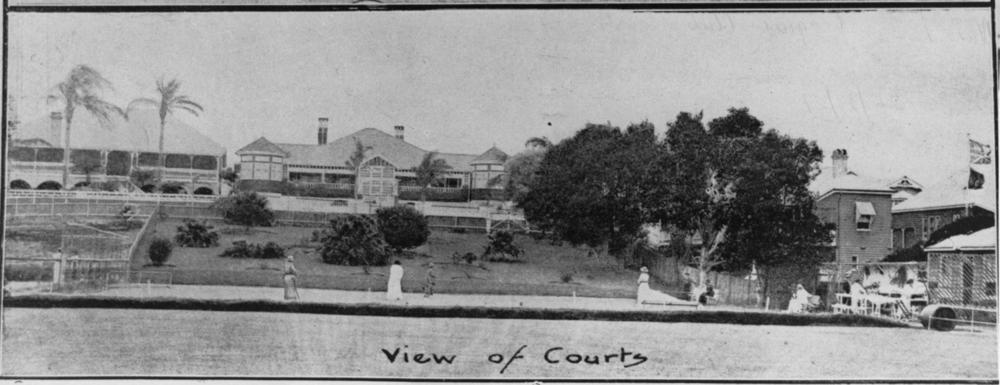
Croquet courts at New Farm, Brisbane, 1921. Four women play while spectators watch from the seats.
The Queenslander, 26 February 1921. State Library of Queensland (public domain).
The Courier-Mail of 12 March 1934 reports the annual meeting of the Windsor Croquet Club and lists Mrs J Gibson as honorary secretary.
Four years later, on 7 May 1938, the same paper reports her elected president, with membership growing from 56 to more than 70, and a bridge club running alongside the croquet.
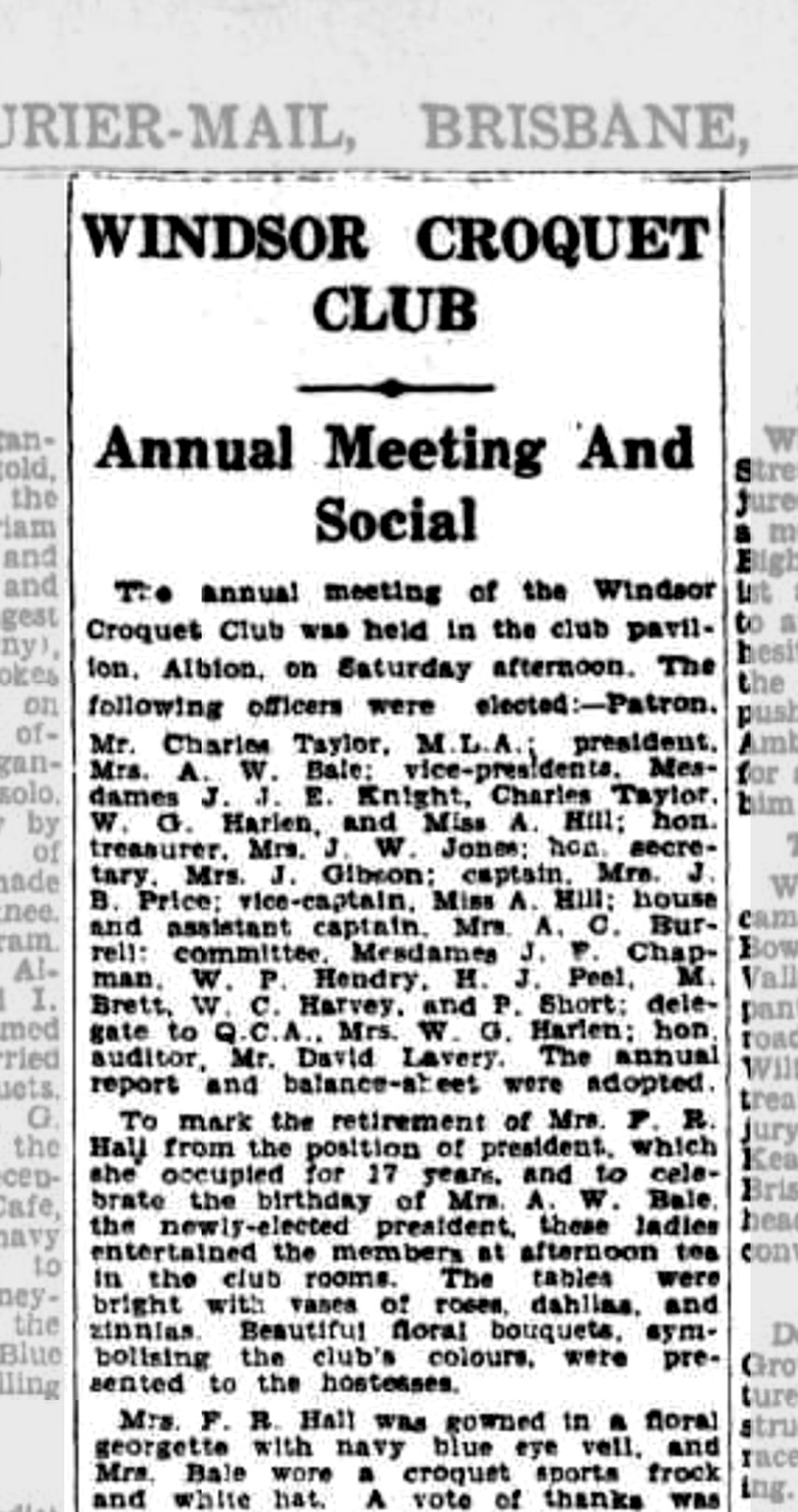
Courier-Mail, 12 March 1934. The first confirmed record of her, as honorary secretary of the Windsor Croquet Club.
Trove, National Library of Australia (article 1178821).
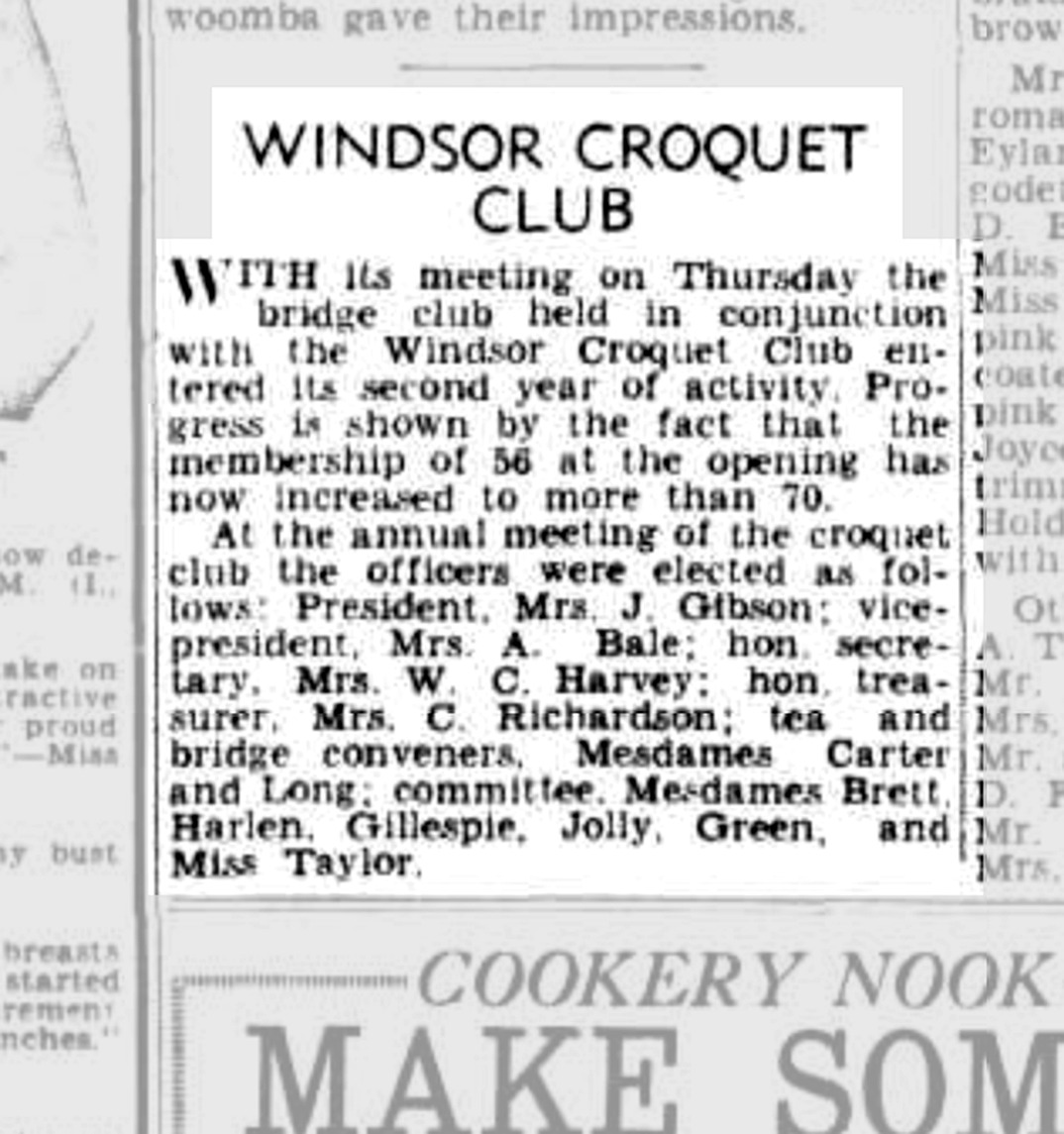
Courier-Mail, 7 May 1938. Now president of Windsor, with membership grown from 56 to more than 70.
Trove, National Library of Australia (article 40990407).
Our history has her learning her croquet at East Brisbane initially then later as a Windsor member for over two decades from the 1930s until the 1950s. As club champion in 1932, 1935, 1937 and 1938, Mrs Gibson proved she was not only an administrator, she could play a bit too!
In all the research however no newspaper made mention of Mrs J Gibson's first name.
In her era a married woman appeared in print under her husband's initial.
So the woman who ran Windsor, then Queensland, then the country, is recorded in the public record as Mrs J Gibson.
This convention of taking her husband's initial in printed record has caused us to nearly lose her name to history.
Our own CAQ list of past presidents called her Jean.
However, Croquet Australia's list of office bearers called her Bessie.
Every newspaper mention I have found says only Mrs J Gibson. Jean is what you'd guess if you had a J and wanted a name to put with it, the obvious expansion a well-meaning list-compiler lands on decades later without meaning any harm.
Nobody guesses Bessie. For Bessie to be written down, somebody had to have actually known that was her name.
That was a reasonable guess about a guess, so I went looking for a record that would prove Mrs Gibson's name. The Queensland Registry of Births, Deaths and Marriages keeps a historical death index. We asked it for every Gibson who died in Queensland in 1958, the year we knew she died.
One name matched. Bessie Kate Gibson. Death registered in Brisbane on 27 October 1958, registration 1958/B/28643. Mother, Charlotte Bain. Father, Colin Phimister, which gives us her maiden name. There was no Jean Gibson among the Queensland deaths of 1958 at all. This is her.
Bessie Kate Gibson died in Brisbane in 1958. What links that entry to our Mrs J Gibson is a Bessie, a Gibson, a city and a year all lining up with Croquet Australia's own record.
Certainly Mrs Bessie Gibson was her name.
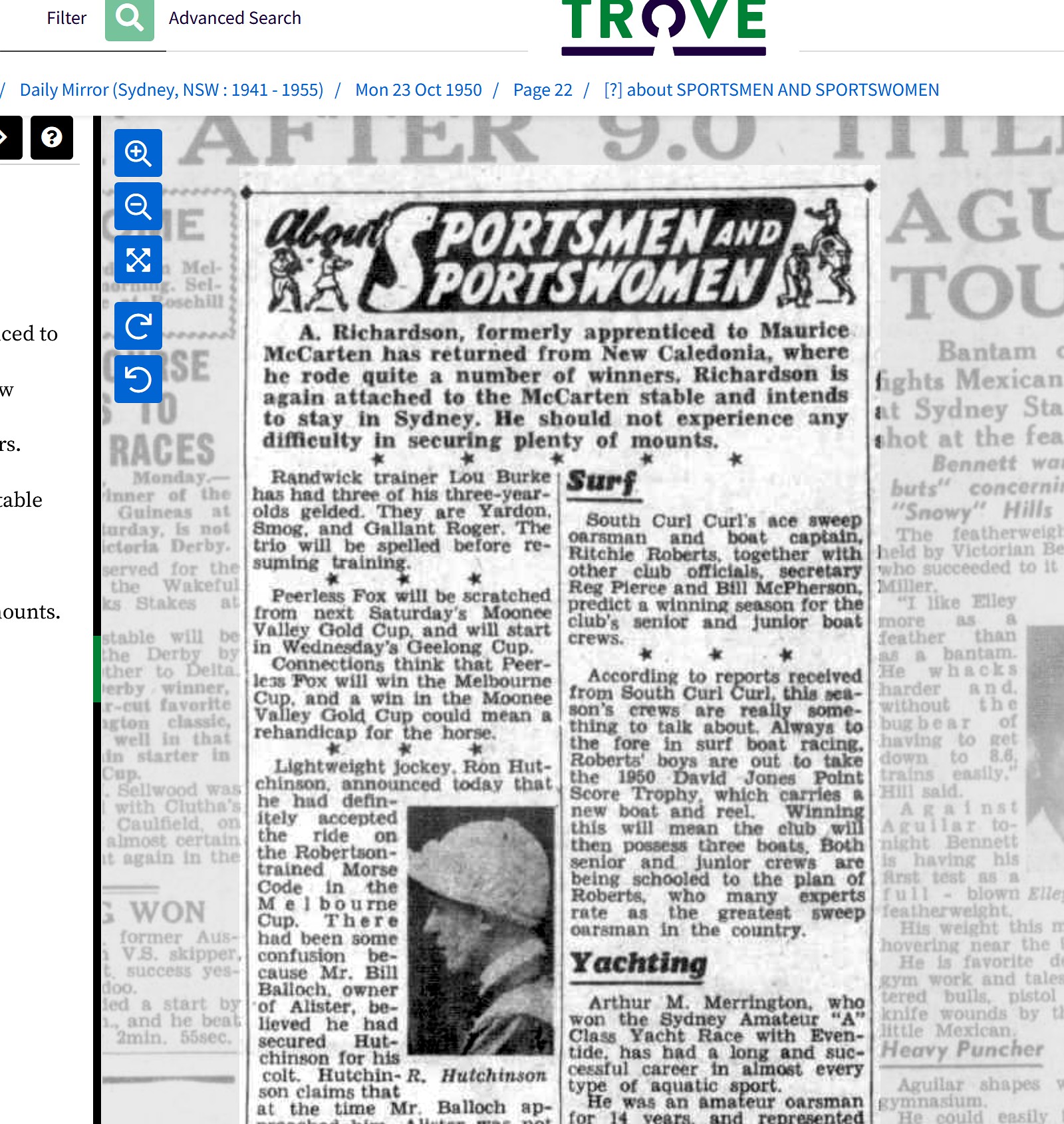
Daily Mirror, 23 October 1950. Mrs J Wall of New South Wales, the Australian Croquet Council's first president, and another woman recorded by her husband's initial.
Trove, National Library of Australia (article 274700435).
Two things are still missing, and one of them is a person. Her husband is the J in Mrs J Gibson. He outlived her, and after she died he gave £100 to found the medal that is being competed for this weekend, but his own first name is gone.
There's no Queensland marriage record for them and no Queensland birth record for her; Phimister, Bessie's first name is Scottish, and she came to Brisbane already married.
The book that would very likely settle it is Winifred Dickinson OAM's A History of the Australian Croquet Council 1949 to 1986. It isn't in the National Library's catalogue; the only copy I have been able to trace sits with Dickinson's old club, Eastwood, in Sydney.
If your club has old minute books, Australian Croquet Council gazettes from the 1950s, or a copy of that history sitting in a cupboard, I'd genuinely like to hear from you.
Moving on from her own name, the more amazing thing is how Bessie actually ran any of this.
She ran a state association, and later a national one, on letters. Entries to competitions taken by post. Draws were typed and circulated. Handicap cards, subscription notices, fixture changes and circulars to every affiliated club all went into envelopes.
There was no dial-direct interstate telephone call anywhere in Australia until April 1962. Across the years she held office, from 1934 to her death in 1958, you did not ring to check a fixture. You wrote, and then you waited.
And the competitions were journeys. Until the standard-gauge line opened in September 1930, Brisbane to Sydney meant thirty-six hours and a change of trains at the Wallangarra break of gauge; after 1930 it was twenty-two hours.
Inside Queensland it was no easier. Cairns to Brisbane on the North Coast line took fifty-three and a half hours in 1924, still forty-one and a quarter by 1953. That is the best part of two days on a train, one way, to play in a state event.
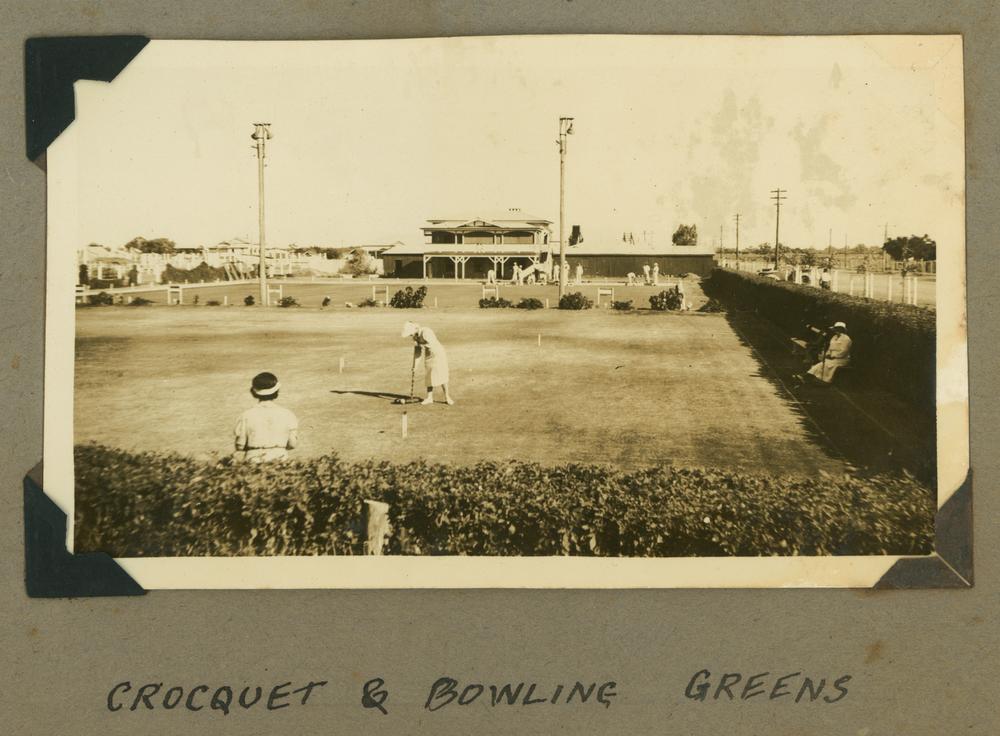
The lawns and clubhouse of the croquet club at Cunnamulla in 1939, out in the state's south-west.
State Library of Queensland (public domain).
We don't have the timetable for the run in from Cunnamulla, but look at a map and think about what entering a state event asked of the people who played there. Not an afternoon. Days, and the money to do it, and a week off whatever else you were meant to be doing.
It is hard enough to coordinate a fixture today, with a phone in everyone's hand and everyone's number in it.
Mrs Gibson organised everyone with stamps.
In March 1940 she was elected president of the Queensland Croquet Association, and she held it through to 1941. The men were away. Women ran croquet, and increasingly a good deal else besides.
In my digging I found a 1941 newspaper account of Mrs Gibson's week, and it is the best thing I found in my research.
Bessie would assist the Red Cross three days a week. In the evenings she made jams and pickles at home and sold them. She sewed aprons, and raised hundreds of dollars for the Red Cross. She was still playing croquet one afternoon a week, but croquet took a back seat because at this moment more important things than croquet were concerned.
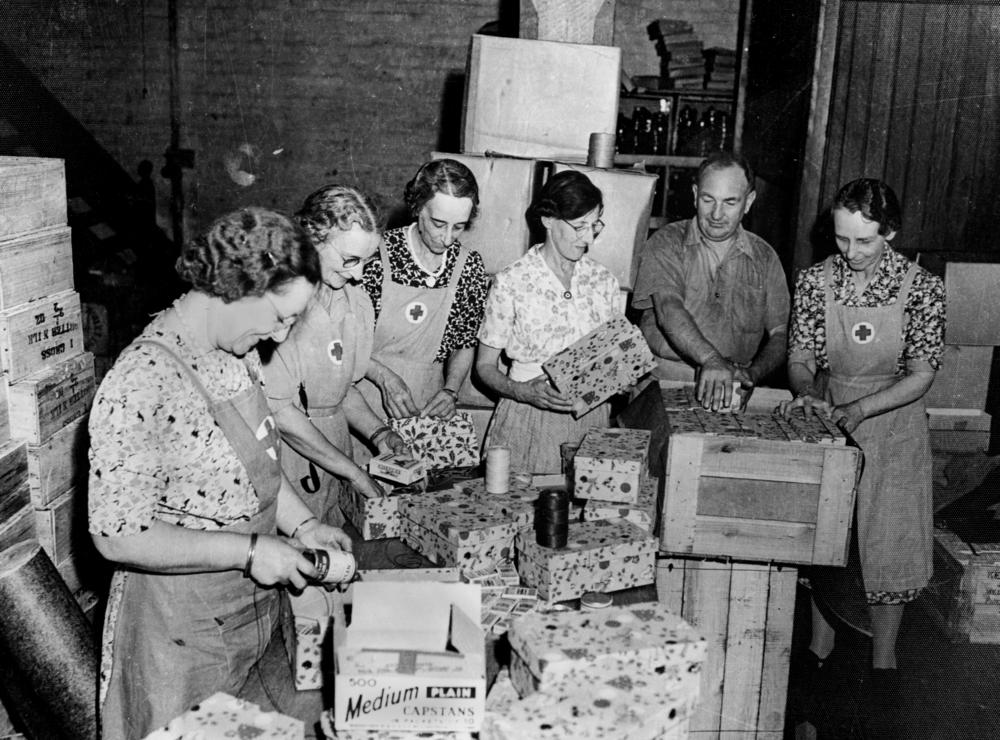
Red Cross workers in Brisbane packing Christmas parcels for the forces, 26 October 1942.
The Courier-Mail, 27 October 1942. State Library of Queensland (public domain).
Mrs Gibson was also treasurer of the Queen Alexandra Home for Children at Coorparoo, the Methodist children's home on Old Cleveland Road.
Finding money to run orphanages, raising money for the Red Cross and quickly fitting in a couple of games of croquet. She was a busy lady.
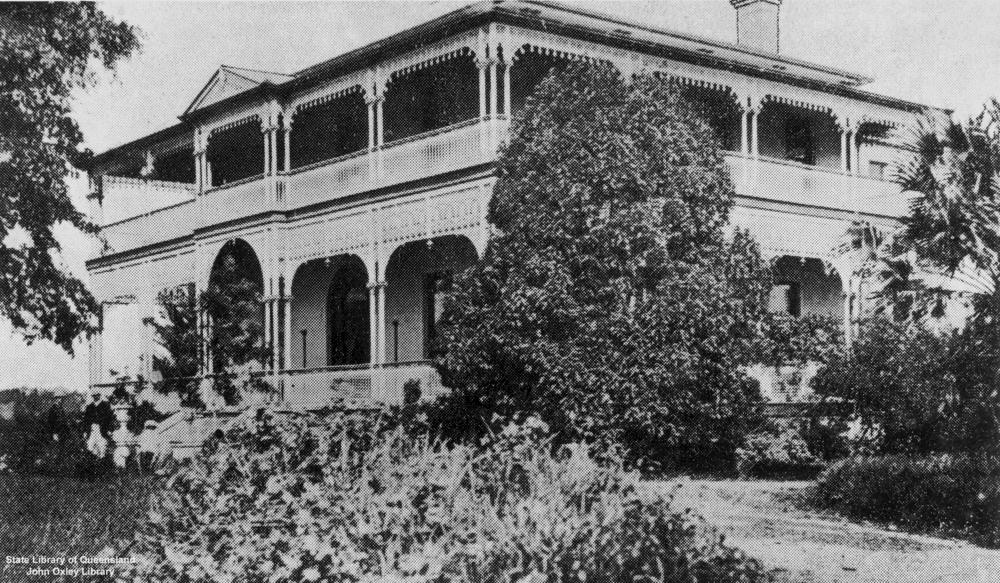
The Queen Alexandra Home for Children at Coorparoo, Brisbane, in 1911.State Library of Queensland (public domain).
The Australian Croquet Council was formed in Brisbane in 1949, the year the city hosted the Eire Cup interstate tests.
The version told for years was that Mrs Gibson founded it, and that Australian croquet broke away from England.
The contemporary press doesn't support either half. Victoria had proposed a national council back in 1946.
The Brisbane meeting about forming an Australian Croquet Council was reportedly called by two visiting English players who were in town to compete.
Mrs Wall of New South Wales was elected the first president, and one of the Englishmen was made honorary secretary.
The council affiliated with the Croquet Association of England nearly immediately.
Our record has her chairing that meeting, and as the senior Queensland croquet figure in the host city she is the obvious person to have done it.
What is hers needs no embellishment at all. Five years later she was elected president of the Australian Croquet Council herself, for 1954, 1955 and 1956, and she was leading the Queensland association again from 1955. For two of those years she held the state and the national job at the same time.
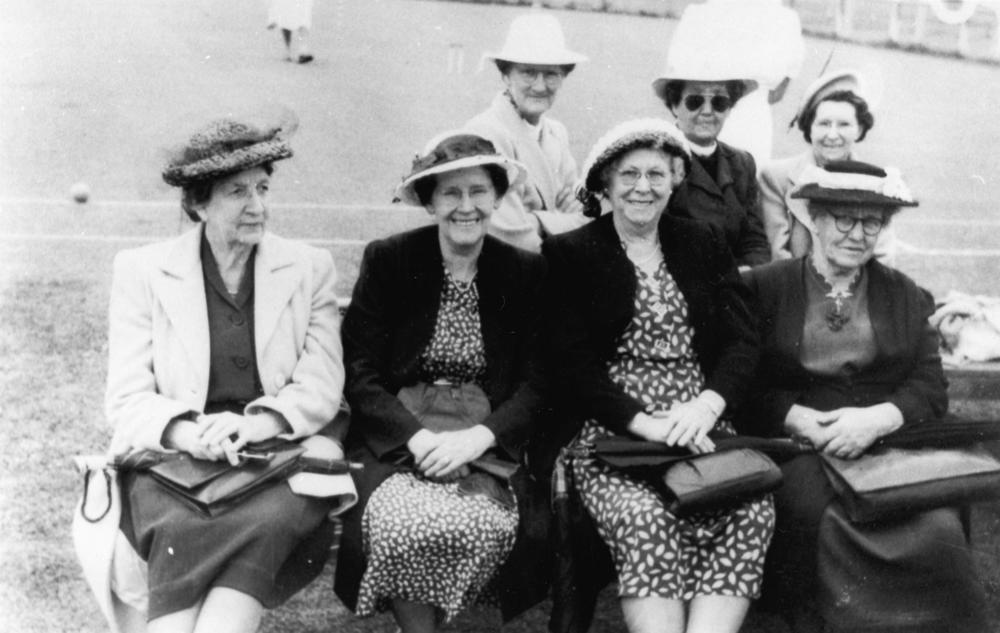
Members of the McIlwraith Croquet Club at the Auchenflower club championship in 1951, on this weekend's lawns.
State Library of Queensland (public domain).
Her husband gave £100 to the Queensland association to found a medal in her memory.
It was first played for in 1961, and the first winner was a Windsor clubmate: Hedley Gunton, already an Australian champion by then, and later part of Queensland's 1963 Eire Cup win.
The most decorated winner of the Gibson Medal is Lorraine Bray of Point Lookout and Maryborough, who took it nine times between 1969 and 1987.
This weekend is the sixty-third playing, in the sixty-fifth year since 1961, so the medal has not been contested every single season.
Whoever wins it will have their name added to a list that starts with a national champion and runs through six decades of winners through nearly all our Queensland clubs.
History done honestly is detective work, but it doesn't always end cleanly. I recovered her name. I could not find her husband's, or the precise shape of her part in that historic 1949 Brisbane meeting.
Set the legend aside and what remains is better: a woman who was a leading figure in growing her sport, raised money through a war, kept the books of a children's home, and finished as national president of the Australian Croquet Council she helped bring together.
Her first name was nearly lost to an old custom, a guess and a missing record, but it is not lost now, and this weekend it gets celebrated again on the beautiful McIlwraith courts.
Research and writing by CroquetClaude. Lightly proofread by CroquetWade.
Windsor's own note on their former member, published earlier this week, is here: Gibson Medal celebrates 63 years at Windsor Croquet Club.
Sources: Trove digitised newspapers, National Library of Australia (Courier-Mail 12 March 1934, article 1178821; Courier-Mail 7 May 1938, article 40990407; The Telegraph 29 March 1940, article 187476923; Courier-Mail 27 October 1942; Daily Mirror 23 October 1950, article 274700435; The Advertiser 1946 and 1948; Victor Harbour Times 25 November 1949; Brisbane Courier 1878). The 1941 account of her week is preserved in Croquet Queensland's own Gibson Medal record. Queensland Registry of Births, Deaths and Marriages historical death index. Croquet Queensland and Croquet Australia records, including the Eire Cup register. Rail and telephone figures: Queensland Historical Atlas; Queensland Museum; State Library of Queensland; Courier-Mail, 23 December 1950 (Trove 50032173). Period photographs: John Oxley Library, State Library of Queensland (public domain).

Get HOOPLA! in your inbox
Topics
Burleigh Heads Palm Beach celebrates spring with garden party
Burleigh Heads Palm Beach members enjoyed a fabulous start to spring with a celebratory garden party.
Skill sharing and social play at Toowoomba Croquet Club
Members at Toowoomba Croquet Club enjoyed a game today, with Alyson sharing her skills in jumping the ball with new play…