Remembering Toowoomba Croquet clubs' proud history of aiding Australia's soldiers
How Darling Downs croquet women raised money for the soldiers in both world wars.
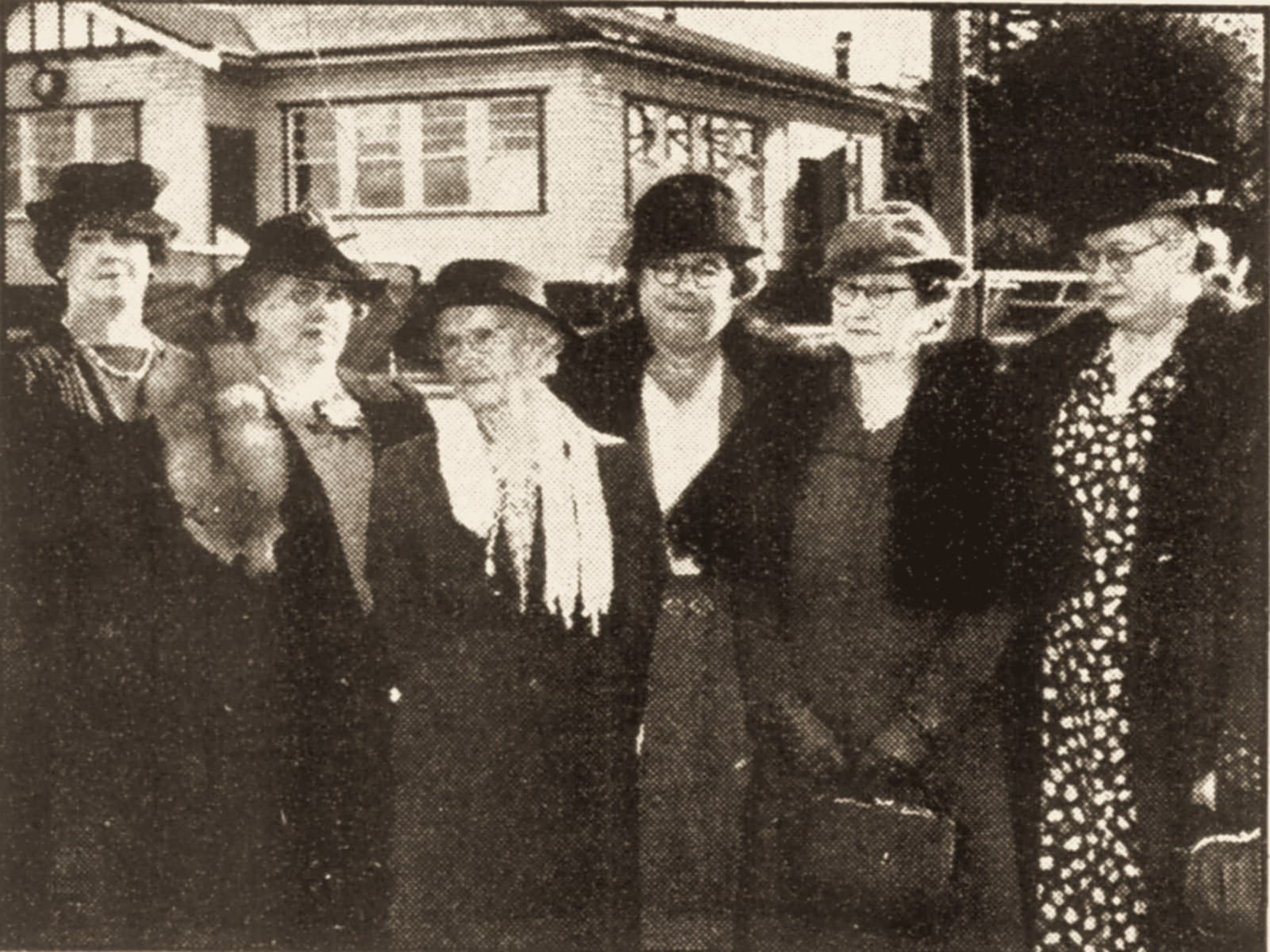
ain photo: West Toowoomba Club Members July 1940, Second World War. (The Toowoomba Chronicle and Darling Downs Gazette, 23 July 1940, via Trove, National Library of Australia)

In both world wars, the women who stayed at home raised money for the soldiers who went away. They held card parties, raffles and afternoon teas. On the Darling Downs, the croquet clubs at Toowoomba, West Toowoomba, Dalby and Laurel Bank were part of that work.
The money they raised went to the Red Cross, the Comforts Fund, the Red Shield and the patriotic funds, which paid for parcels, huts and convalescent beds for men in uniform.

Red Cross women pack comforts for Australian prisoners of war in London, about 1918. First World War. (Australian War Memorial, H00507, public domain)
The habit started within weeks of war breaking out in 1914. An early Mayor's list for the Toowoomba and District Patriotic Fund included "Toowoomba Croquet Club £1 0s 0d".
In August 1915 the club dropped its annual presidents' tea "Owing to the war". Many families in the district had husbands and sons away at the war. Club tournaments still went ahead.

Toowoomba Red Cross women in January 1919, printed as "Another Group of Toowoomba Patriotic Workers". The paper said Toowoomba's women "have done excellent work in many directions." First World War. (The Sydney Mail, 29 January 1919,State Library of Queensland, no known copyright restrictions)
Across Queensland, Red Cross branches run mostly by women knitted, sewed and packed parcels of soap, fruit cake and handkerchiefs.
Nearly forty years later, at Toowoomba's jubilee, the paper recalled the club's founders: "These ladies in World War I almost abandoned their croquet to help the Red Cross and Comforts Fund." Home service for the War Effort came in many shapes.
When the devilish spectre of war came again in 1939, the clubs again volunteered to do their duties. By now croquet was a very popular pastime and the clubs had their club houses built and were flourishing parts of the Toowoomba community.
"Notwithstanding the very trying times and war clouds over us, we have again had a very successful year," West Toowoomba wrote of 1940. Its members gave up their prizes and sent the money to war appeals instead.

Dalby Croquet Club members in white on the lawn in front of the clubhouse, 1938. (The Dalby Herald, 7 October 1938, via Trove, National Library of Australia)
At Dalby in October 1940, the committee planned a bridge and croquet afternoon to aid Londoners suffering bombing under the Blitz. The Dalby Herald printed: "As this is an effort by the Croquet Club to help the bombing appeal fund for the Red Cross it is hoped to have a successful afternoon." Funds were raised with tea, cards and novelty lawn games.
The war reached the lawns too. "Owing to the serious war situation" the inter-State and Darling Downs tournaments were cancelled, and the clubs agreed to give up pennant matches "until world affairs were again normal," the club's report for 1941 said.
West Toowoomba gave up its birthday tea. "In place of the usual birthday tea it was decided to hold a patriotic bridge party." The club said simply: "It was a great success socially and financially." A second party in October raised £13/16/. Around 1940 a four or five roomed Toowoomba house rented for about 17 shillings a week, so that one afternoon brought in about sixteen weeks' rent. In today's rent, that's about $10,000.
Over the year the club gave £47/16/ to war funds, more than a year's rent for a family home, about $30,000 in today's rent.
What a magnificent fundraising effort to help.

West Toowoomba Croquet Club's report for 1941: two patriotic bridge parties and £47/16/ to war funds. The list of winners' names is cut out. Second World War. (Toowoomba Chronicle and Darling Downs Gazette, 4 February 1942, via Trove, National Library of Australia)
The funds the ladies raised went to the Toowoomba branches of various assistance organisations and the money went on to hospitals, camps and canteens, or through the International Red Cross in Geneva to prisoner of war camps.

A Red Cross prisoner-of-war parcel that came back from Geneva, Melbourne, 9 August 1944. Second World War. (Australian War Memorial, 141550, public domain)
At Dalby the women met every month for euchre. On Melbourne Cup day they held a bridge and euchre party. "The proceeds, amounting to £10, were given to patriotic funds," the president, Mrs A. White, reported in March 1942. That was more than two weeks' wages for a working man. Most of the players, she said, gave "a good deal of time during the week to war work."
The Mayoress, Mrs T. Jack, thought it "good to see members taking a little recreation on the croquet lawns".
In September 1942, at the club's monthly euchre afternoon, Mrs T. Jack handed over two cheques, £26 in all, from the club and the Country Women's Association. They went to the returned soldiers' Women's Auxiliary, towards a Diggers' Recreation Room in Dalby. Mrs J. Hanley, the Auxiliary's president, "expressed the thanks of her members for the gift."
By 1943 the work was steady. "During the year our members have been organising monthly bridge parties to supplement the funds of the Red Cross. These have been very popular," said Toowoomba's president, Mrs G. E. Fogarty. The man who kept the lawns had enlisted and top dressing was hard to get, "but in spite of all these setbacks our lawns have never been in better playing order."
That February the Red Cross opened the Robertson Convalescent Home in Toowoomba, for patients who had come from New Guinea. West Toowoomba held a bridge party for it on 1 March.

Mrs Annand presents a trophy to Mrs Esler at the Toowoomba Croquet Club pavilion, 1936. (The Toowoomba Chronicle and Darling Downs Gazette, 30 July 1936, via Trove, National Library of Australia)
In October 1944 Toowoomba ran a "Red Cross Special Appeal croquet and bridge party", and the raffle prize was a "Donald Duck". That year the Red Cross branch president, Mrs Annand, thanked the club for its "substantial support of the Red Cross each year."
Each body had its own job. The Red Cross cared for the sick, the wounded and prisoners. The Australian Comforts Fund sent soap, razors, barley sugar and Christmas hampers to men still fighting, under the motto "Keep the Fit Man Fit".

Women sew shirts and fur vests for the Australian Comforts Fund at Melbourne Town Hall. First World War. (Australian War Memorial, J00360, public domain)
The Salvation Army's Red Shield ran huts and mobile tea canteens, one of them even on the inhospitable Kokoda Trail.

A Salvation Army woman at a Red Shield mobile canteen van, Northern Australia, July 1943. Second World War. (Australian War Memorial, NEA0125, public domain)
West Toowoomba gave to all of the causes. In July 1944 the club sent £5 each to the Comforts Fund, the Red Cross, Prisoners of War and the Red Shield Huts. A Red Cross group could adopt a prisoner for £1 a week, so each £5 paid for about five weeks of parcels. The club's report that year said: "Despite present day conditions, our club has justified its existence, in that it has provided a healthy outdoor recreation for our members, many of whom have been occupied with patriotic activities."

Helpers at the sweet stall of the Laurel Bank Croquet Club fete, 1934, before the war. (The Toowoomba Chronicle and Darling Downs Gazette, 2 July 1934, via Trove, National Library of Australia)
Laurel Bank kept going too. "We always find a certain amount of happiness in our game of croquet and that helps a lot," its president wrote in 1944.
In August 1945 the war ended.
At Dalby the members held a gala day, "with the ladies relaxing in their first day on the lawn under peace conditions for so long," the Dalby Herald wrote.
At West Toowoomba, "A Victory cake, made and donated by Mrs. O'Connell (president of the club), was iced and decorated with patriotic emblems," the Chronicle reported.
At Laurel Bank's victory party in September, the cake was "decorated with miniature flags."
They shall grow not old, as we that are left grow old:
Age shall not weary them, nor the years condemn.
At the going down of the sun and in the morning
We will remember them.
The Ode of Remembrance, from Laurence Binyon's poem "For the Fallen", 1914.
Lest we forget.
Every club report quoted here, with the scanned clipping and a typed copy, is on the club history pages for Toowoomba, West Toowoomba, Dalby and Laurel Bank, linked from the history front page. History for the other regions will be added.

Get HOOPLA! in your inbox
Wynnum members tidy gardens at Sunday working bee
Eight Wynnum club members gave up their Sunday morning for a working bee organised by Tony. The gardens bordering the cr…
Members enjoy a fun Melbourne Cup day
Headland-Buderim members enjoyed a fun Melbourne Cup. Thanks go to Colin for organising the event and Robyn for coordina…