Preparing your courts for a dry summer
A record-strength El Nino means a hotter, drier spring run-in. Five things to put to your groundsman this month, while the courts are still waking up.
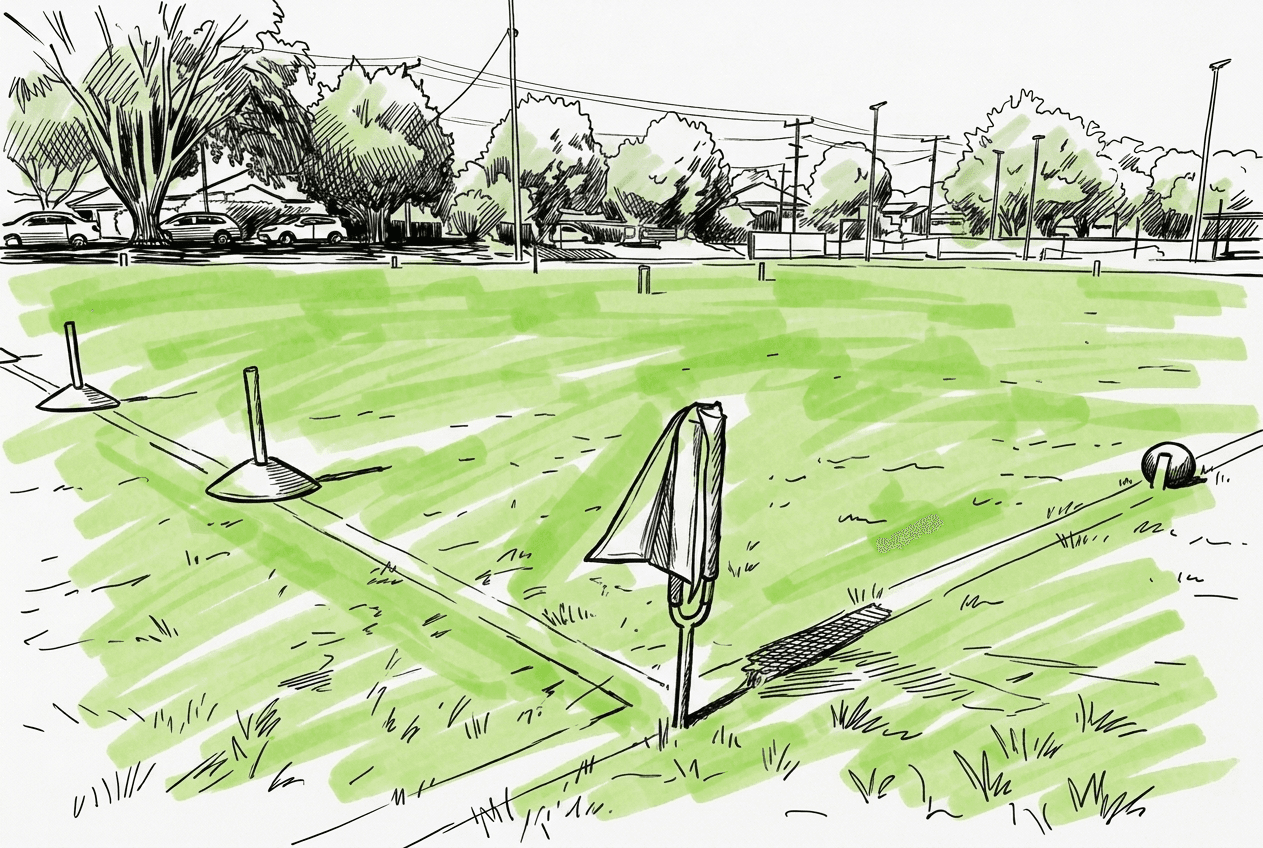

Croquet lawn coming out of winter dormancy, hoops and a peg in view
alk onto most Queensland croquet courts this month and you will see it happening. The straw-brown couch that sat quiet through winter is starting to green up. In Brisbane, the first signs usually show in late August. By September, the grass is waking properly, and the first mow of the season is close.

This is the month that shapes the summer. What a club does now helps decide how its lawn copes with the heat ahead.
The grass is not the only thing that takes time. A written water policy needs a committee meeting to agree on it. A rainwater tank takes a few weeks from order to installation. A bore can take six to eighteen months from the decision to water flowing, and longer if licensing is involved. If your club has been talking about any of these, September is the time to act.
Our ClubHub guide, Getting the Lawn Through a Hot, Dry Summer, is a good place to start. The first job of the month is underground.

Cracked, drought-dry ground in ink and wash
Before anyone reaches for a bag of fertiliser, it pays to know what the soil needs. A soil test checks pH, nutrients and organic matter. For an established court, it is worth doing every two to three years, ideally while the grass is still dormant. That way the September feed is targeted, not guessed.
Two labs handle sports-turf testing in Queensland: SESL Australia and Nutrient Advantage/SGS. Ring them for a current quote rather than relying on an old price. Our Soil Testing guide has more.
Couch cannot use fertiliser while it is dormant. Feeding too early can burn the runners when growth starts again. So wait until the grass is clearly growing. Then apply a balanced NPK product, such as CK88 or Granulock Blue, at 3 to 4 kg per 100 square metres. That gives the lawn a strong push out of winter.

Seasonal timeline: dormancy ending, September feed, spring flush, first mow

Mowing the lawn, ink and wash
On sandy coastal soils, such as those on the Gold Coast, the Sunshine Coast and around coastal Brisbane, the ground can start to repel water after a long dry spell. Wetting agents prevent this, but only if they go on before the dry patches appear. Once the patches show, you are playing catch-up. Products sourced for Queensland fine turf include Qualibra, CalWet, DRENCH and H2Pro AquaSmart. Our Wetting Agents guide has more.
Growing couch needs about 25mm of water a week to stay playable. Give it a deep soak of 10 to 15mm every two to three days, rather than a light sprinkle each day. Deep watering sends roots downward. Water before 8am. Leaves that stay wet overnight invite brown patch disease.
When mowing, never take off more than one third of the blade height in one cut. A stressed lawn scalps easily.
Before the heat arrives, take the twenty-minute walk-around in Is Your Water System Ready for Summer?
Most water authorities in South East Queensland treat sporting clubs differently from households. Urban Utilities and Unitywater each run their own schedules. Contact yours now and ask for your club's status in writing. An exemption sought after restrictions start is harder to win. For now, the Seqwater dam levels dashboard shows combined storage at 81.2% on 13 September, a slow decline from 82.6% a month earlier.
The Bureau of Meteorology ENSO Outlook reported that a strong El Nino continues to intensify, with the key index at +2.20°C for the week ending 9 August. Check the Bureau's page for anything more recent.
El Nino's rainfall effect is strongest in winter and spring. Rain usually returns to normal by around January. The real summer danger is heat arriving after a dry spring. That means heightened risk, not a certain disaster. Read more in A Record El Nino and Your Courts, and browse all our Grounds and Facilities guides.

Get HOOPLA! in your inbox

Bribie Island's doubles final goes all the way to the last hoop
Bribie Island Croquet Club's October news: a doubles final won at sheep station, Steve Bickley 8th at the GC Nationals, …
No need to sign in to play
Registered players don't need to sign in. Only visitors and overseas players must be recorded.