Lumps, bumps and the busy life under your lawn
Wynnum's lawns sprouted hundreds of worm casts after the rain. What are they, why do they come and go, and what's that other lump that turns up in drier weather?
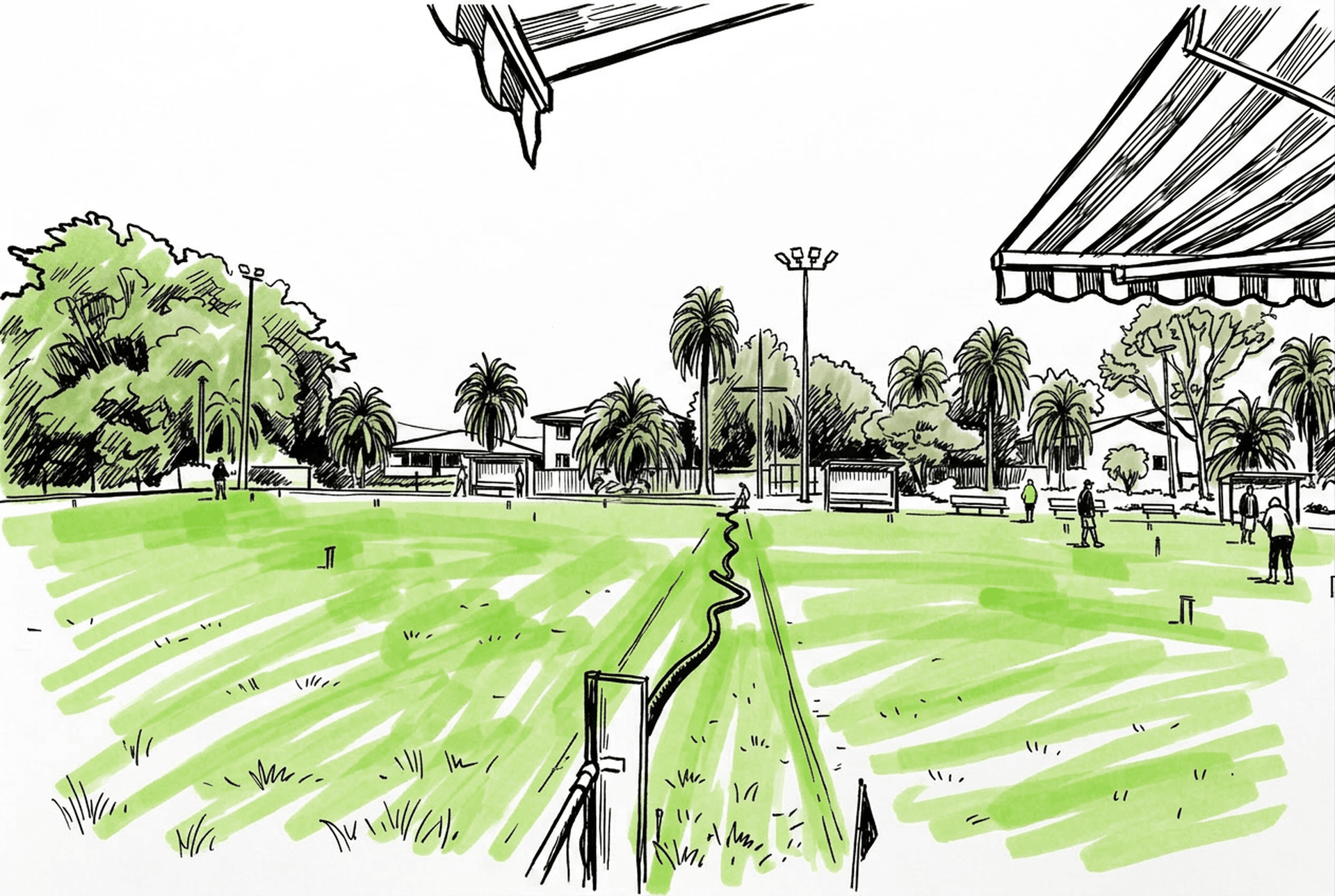
fter weeks of wet weather, the players at Wynnum found their lawns covered in little mounds. Worm castings, in their hundreds.

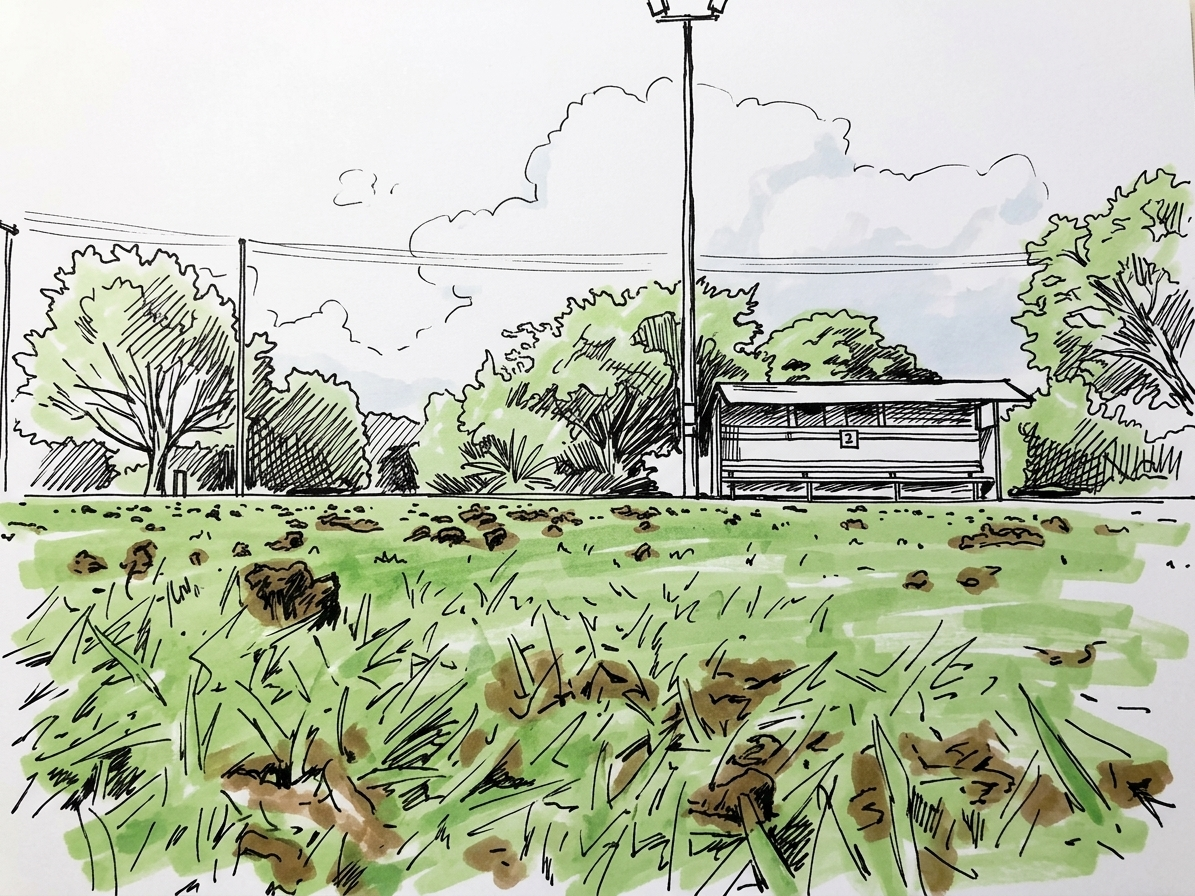
Worm castings scattered across Wynnum's green after the rain (Wynnum Croquet Club)
The club took the muddy shoes and mess in good humour and shared the verdict on their Facebook page: a sign of a healthy, living lawn. They're right.
For the soil, those casts are good news. For a croquet player, the story's a little different. The tiny mounds deflect a ball, slow it down when you least expect it, and leave muddy deposits on balls, shoes and even mallets. A precision croquet shot can become a game of chance.
Wynnum's homemade boot cleaners can solve part of the problem at least, keeping the mud outside.
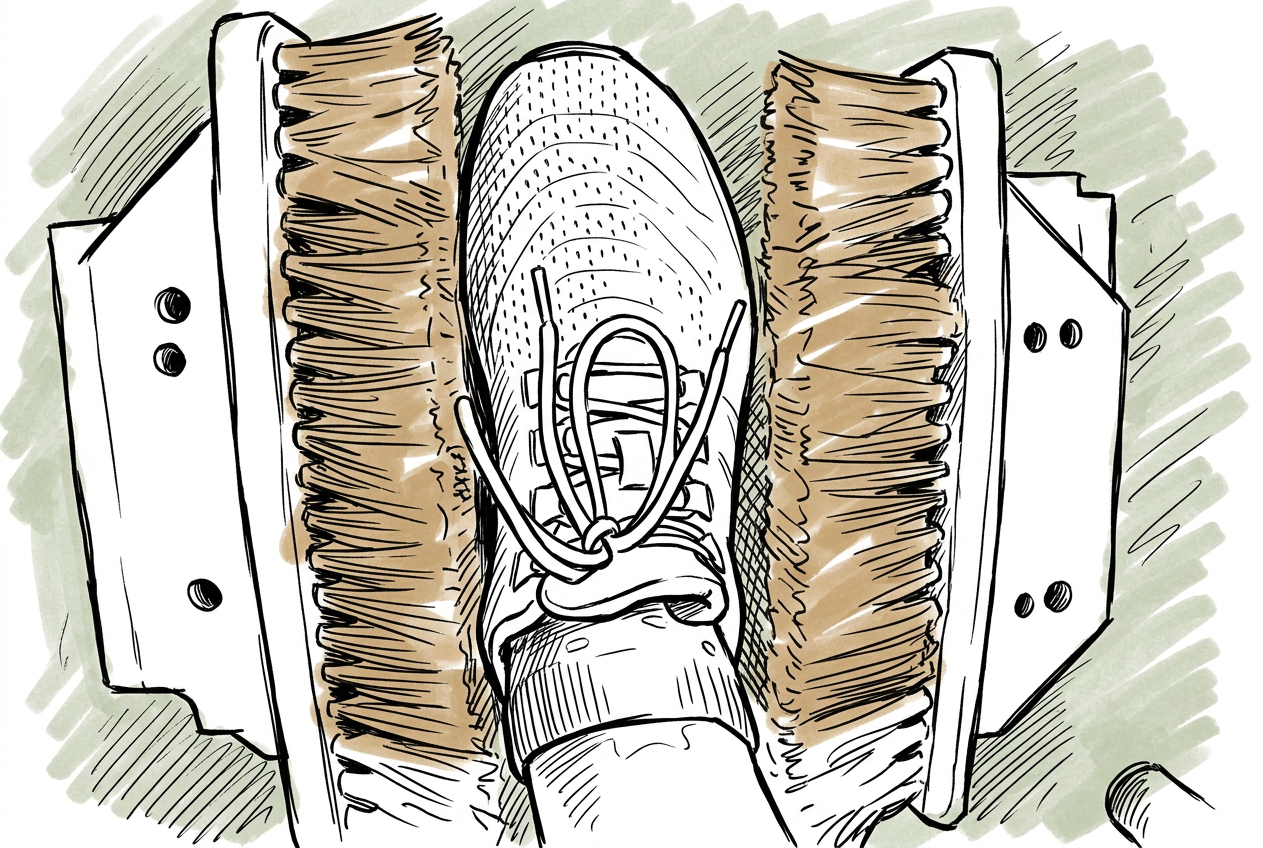
Wynnum's homemade boot cleaners: stiff brushes you scrape your muddy shoes between (Wynnum Croquet Club)
So what is a worm casting, exactly? It's soil that has been through a worm. The worm eats its way along, digesting bits of leaf and thatch and old grass, and leaves the processed earth behind it on the surface in a neat little coil.
The mound isn't damage. It's the worm tidying up after itself, just unhelpfully in the wrong place for us.
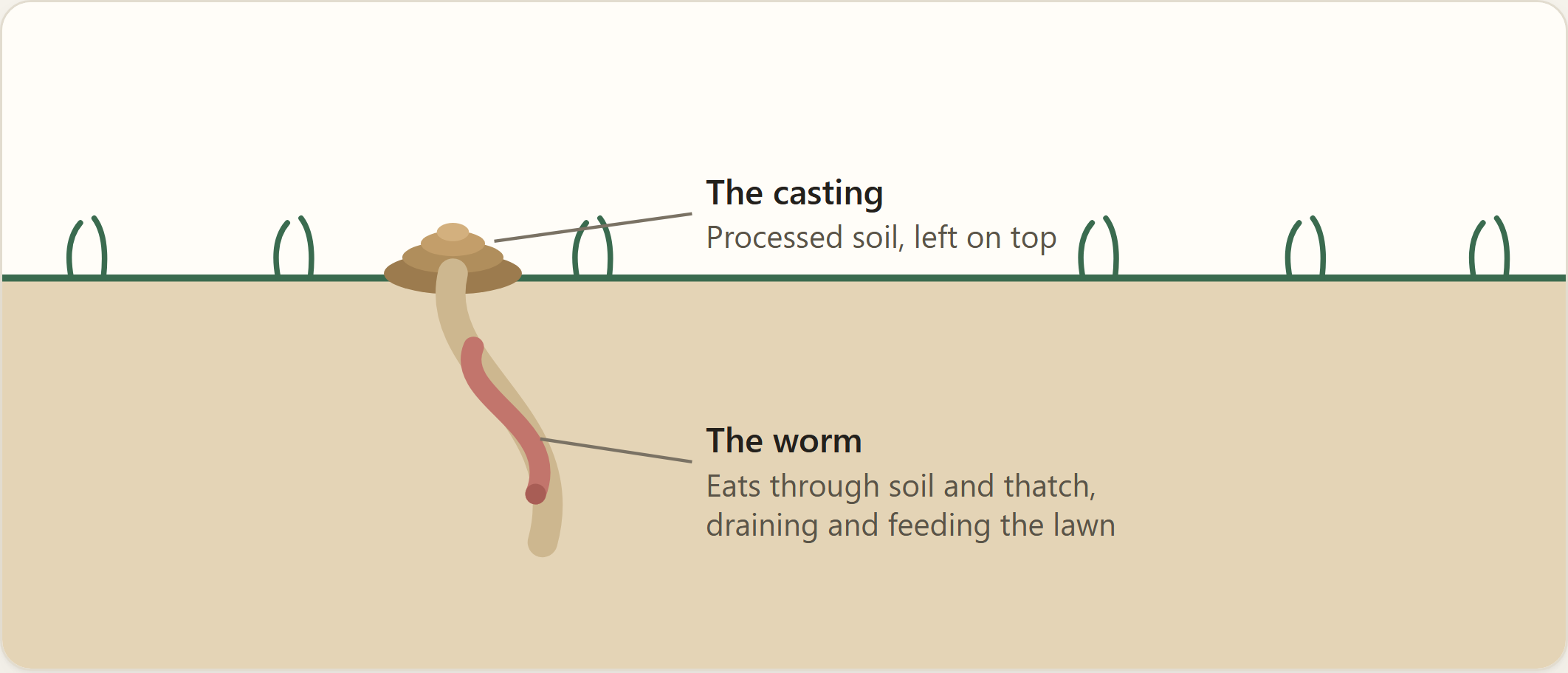
Cross-section of a lawn: a worm in its burrow leaves a casting on the surface (Croquet Queensland)
And the worm is worth keeping. Its burrows let water drain away and air reach the roots. It recycles nutrients back into the soil and eats the thatch that would otherwise build up and choke the green. A lawn with plenty of worms is a healthier lawn than one without.
Reach for the worm poison and you'd be sacking your best unpaid groundsman.
The good news is that worms come and go. They need cool, moist soil, so they come up after a good wet spell and through the damper months, then disappear once the ground dries out. That's why Wynnum's greens lit up after weeks of winter rain. Casting comes with the wet and leaves with the dry.
While they're about, the trick is to manage what they leave behind and let the worms be. The golden rule: brush the casts off when they're dry, before you mow. A dry cast crumbles to nothing under a stiff broom or a switch, and scatters back into the sward as free topdressing. Mow over a wet cast, and you'll smear mud across the green and thin the grass underneath.
Dry first, every time.
A few slower habits help too. Mow with the catcher on and take the clippings away, so there's less for the worms to feed on. Topdress with sand over a season or two to keep the surface firm. Feed with an acidifying fertiliser, since the casting worms prefer a sweeter soil. Keep the drainage honest.
None of it involves poisoning anything, which is just as well. The old worm-killers have been off the market for years, and you wouldn't want them anyway.
Come the warm dry months, a different lump appears, and it has the opposite tastes. Meet the funnel ant.
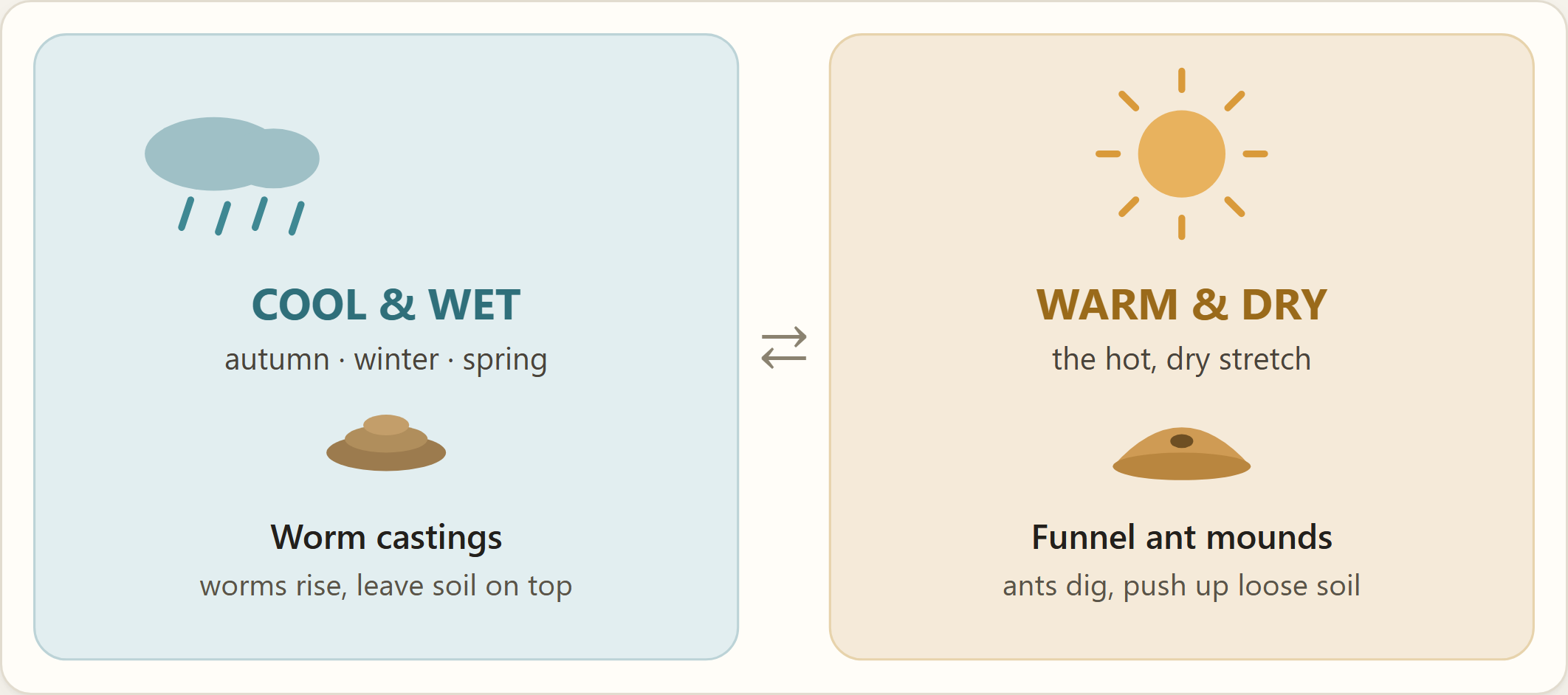
Two lumps, two seasons: worm castings in the cool and wet, funnel ant mounds in the warm and dry (Croquet Queensland)
Where the worm wants cool and damp, the ant wants warm, dry, sandy soil that's easy to dig. The very conditions that send the worms underground are the ones that bring the ants out.
Ant mounds are a bigger headache than worm casts, and a more stubborn one. A funnel ant nest can throw up a mound the width of a dinner plate, built from loose soil the colony has dug out from below. That soil smothers the grass and undermines the surface, and the colonies link up underground, so one mound is rarely the only one.
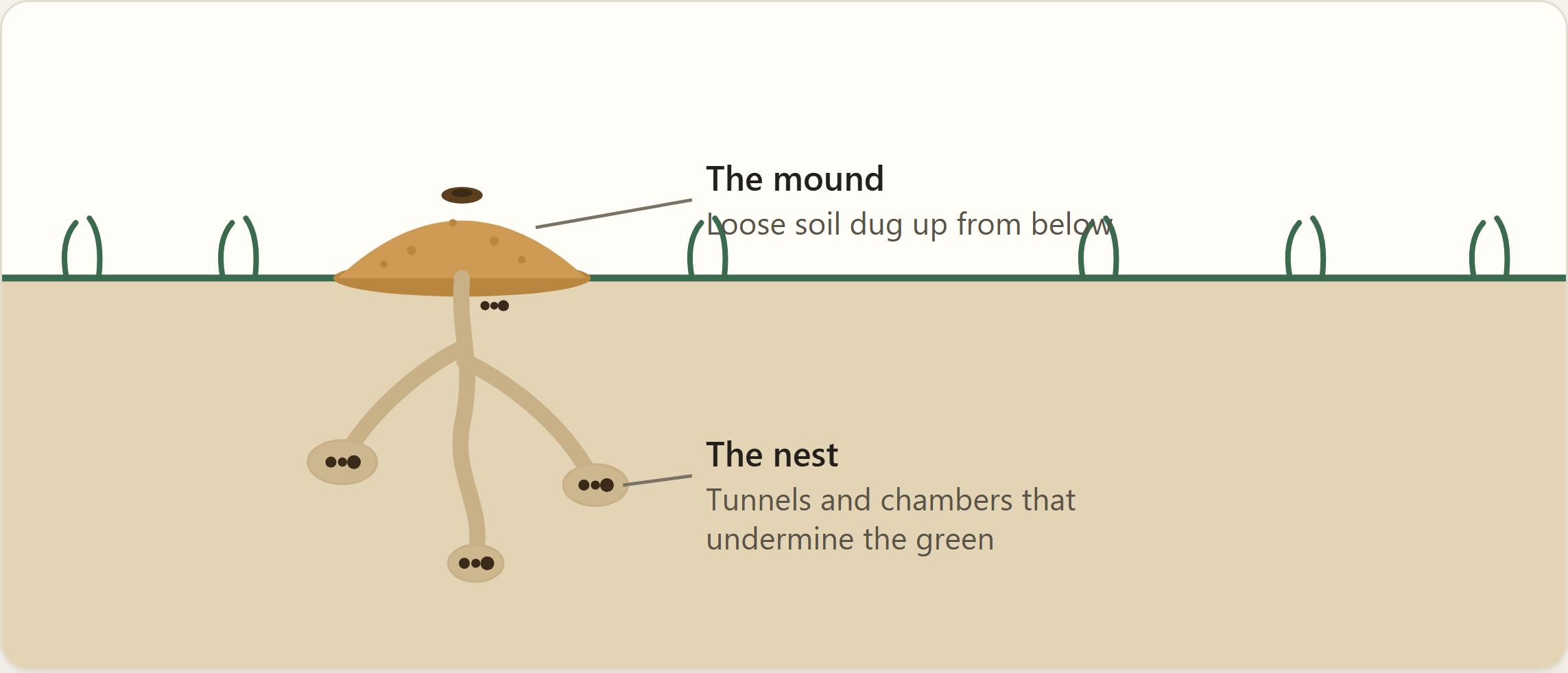
Cross-section of a funnel ant mound: loose soil pushed up on top, with the nest tunnels and chambers undermining the green below (Croquet Queensland)
The ants don't eat the turf. All the trouble comes from the digging.
Ants are harder to shift, but a few things help. Keep the turf thick and the root zone moist, because ants prefer it dry and open. Level a mound before play if you must, knowing it'll likely be back by afternoon.
For a real infestation there are targeted baits and registered products that work. Use them with care and good advice, because people walk and kneel on this surface. It's no place for guesswork with chemicals.
Step back and there's a tidy pattern to it. Two lumps, two seasons. Worms in the wet, ants in the dry, each arriving as the other leaves. Neither is a sign the lawn is failing. Both are signs it's alive, and a living lawn is the one we want to play on.
So the next time the green sprouts a rash of little mounds, don't despair. Have a look at the weather, work out who's visiting, and reach for the broom before the spray.
A few good habits keep the surface true, and a sense of humour helps. Wynnum clearly has both. How does your club handle the lumps and bumps? We'd love to hear.
_With thanks to Wynnum Croquet Club, whose posts on their worm-cast season started this off: a sign of a healthy lawn, the hidden challenge for players, and the handy boot cleaners._

Get HOOPLA! in your inbox
Have a gander at Twin Rivers' New Clubhouse
Ten years with no ground of its own, then courts and a shed. Now Twin Rivers has a clubhouse. Take a walk round with Wad…

Eildon volunteers raise over $2,000 at sausage sizzle
Eildon croquet club volunteers successfully ran a sausage sizzle at Bunning Rothwell, raising $2,162.67 for the club.