Pickleball injuries are rising, and croquet is a gentler option
The game that keeps the competition and the company, without the pounding your knees have started to notice.

ickleball has been one of the great sporting stories of recent years. A Sydney physio clinic, Evolve Physio and Mastery, calls it the fastest-growing recreational sport in Australia over three years. It is social and easy to pick up, and it has brought plenty of older Australians back into sport after a long break.

That is the good news. The other news is arriving at physio clinics.
The same Sydney clinic says pickleball injuries are now its fastest-growing source of referrals for people over 50. In Brisbane, Articulate Physiotherapy says these injuries hit adults over 50 hardest, and that many of them are returning to regular exercise after years of being less active.
The list is a familiar one to anyone who has played. Rolled ankles. Strained calves. Achilles trouble. Sore shoulders, elbows and lower backs, and sore knees.
The physios point to the court itself. It is small and hard, so the game is full of quick stops and starts and sudden sideways cuts. Do that often enough, and something gives.
Now picture a different morning. You are on a grass lawn. Nobody is running. Nobody is lunging sideways for a ball. You walk to your ball at your own pace, take your time lining up the shot, and play it.
That is croquet. As our earlier piece, Croquet Questions? Here Are the Answers, put it: there is no running, no jumping and no heavy lifting.
But do not mistake gentle for easy. Croquet keeps the thing many pickleballers love most, which is a real contest.
For the full answer, see Hoopla's guide Is croquet good for bad knees?
People have long called croquet "chess on grass", and Association Croquet shows why. Croquet Canada describes it as a tactical struggle, with each player trying to steer both their own balls and their opponent's. A good player thinks several shots ahead and can string together a long break. We explored this more in Croquet Is Chess on Grass.
Most newcomers start with Golf Croquet. It is the version most clubs play, and you can learn the rules in about ten minutes. It is simpler, but there is still plenty to think about with every shot.
Croquet is a club sport at heart. You turn up, get paired with someone, play, and then most clubs put on morning tea. Men and women play on the same lawn, and age is no barrier at all.
You do not need any gear. Clubs supply the mallets and balls. Bring flat-soled shoes so you do not damage the lawn, and a hat for the sun. Casual clothes are fine.
Better still, Come and Try is free. Through comeandtrycroquet.com you can book a free three-week beginner course, with all equipment provided and no experience needed.
Croquet Queensland has 41 clubs across the state, spread over seven regions. There are clubs in Brisbane North and South, on the Gold Coast and Sunshine Coast, in Toowoomba and across the Darling Downs, and in regional towns from Bundaberg and Hervey Bay to Rockhampton and Mackay. Beginners are welcome at every one.
Go to comeandtrycroquet.com and enter your postcode to see times at your nearest club. You can also use the club finder at croquetqld.org.
Keep the competition. Keep the friends. Give your knees a rest.

Get HOOPLA! in your inbox
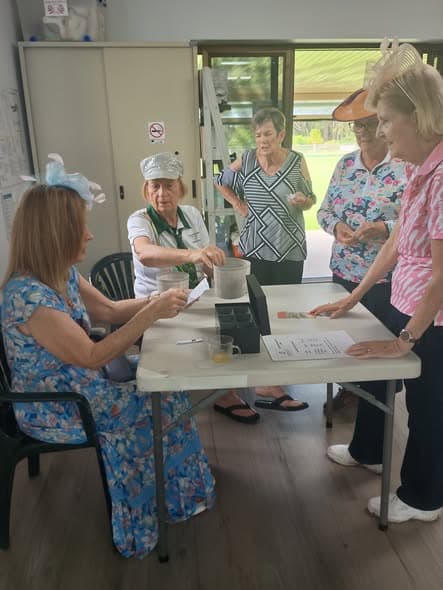
Members enjoy a fun Melbourne Cup day
Headland-Buderim members enjoyed a fun Melbourne Cup. Thanks go to Colin for organising the event and Robyn for coordina…
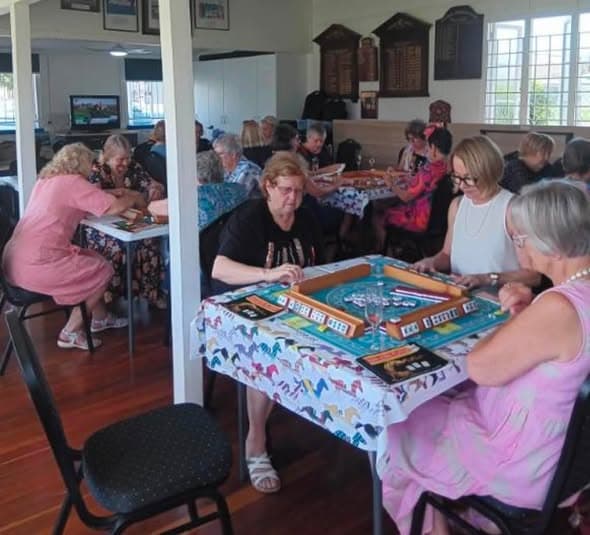
Melbourne Cup Day celebrated in style at Windsor
Twenty participants enjoyed mahjong and a world class luncheon on Melbourne Cup Day. Congratulations to Cathy Berry, who…