Croquet Is Chess on Grass
Croquet combines strategic thinking, physical movement, and social connection. Research shows this combination is exactly what keeps older brains sharp.
[mage: A public chess table in a city park. Croquet shares the same outdoor, head-to-head logic. -- https://images.pexels.com/photos/19968068/pexels-photo-19968068.jpeg]

A public chess table in a city park. Croquet shares the same outdoor, head-to-head logic.
People call croquet "chess on grass." The name fits.
Both games reward thinking ahead and punish reactive play. You read your opponent. You adapt when plans fall apart. The difference is croquet gets you outside, moving, and talking to people between shots.
If you miss the strategic thinking your career demanded, croquet might fill that gap.
What makes it strategic
In Golf Croquet, you're trying to get your ball through the hoop before your opponent does. You block their path. You set up your next three shots. Every turn is a decision: go for the hoop or disrupt your opponent? Play safe or take the risky shot?
The rules take ten minutes to learn. The strategy takes years.
Your brain on croquet
A 2025 meta-analysis looked at 58 studies on exercise and brain health. Activities combining movement with cognitive demand, what researchers call "mind-body" exercise, produced the largest improvements in memory and executive function. Larger effects than aerobic exercise alone. Larger than brain games alone.
Croquet fits the description. You're walking one to two kilometres per game. You're calculating angles and shot sequences. You're reading your opponent's habits and adjusting your plan. And you're doing it twice a week with people who know your name.
The social part matters. A study on group-based cognitive training found that doing the activity with others amplified the brain benefits. Playing together, week after week, made the difference.
The physical side
Croquet won't turn you into an athlete, but you'll spend a couple of hours on your feet, walking, bending, and making controlled swings. It's light exercise wrapped around a mental workout. The cognitive demand is the point here.
Patterns, not pieces
Chess players talk about "chunking," seeing clusters of pieces as a single pattern rather than individual units. Croquet players develop the same skill. You stop seeing four separate balls and start seeing the geometry between them.
This is the mental workout. Four balls on the lawn, angles shifting with every shot, risk weighed against reward. You plan three moves ahead, then someone disrupts your sequence and you recalculate.
The social layer
Croquet puts your opponent across the lawn from you. You learn their habits over weeks of play. You test their weaknesses. The competition is richer because it's human.
And between games, there's morning tea.
How long to get good?
You can play a real game on your first day. Most people are competitive within a few weeks. Mastery takes years, which is part of the appeal.
Try it
Croquet keeps your mind sharp because it demands real cognitive work. You plan ahead. You adapt. You do it outside, with people you'll get to know.
The research says physical activity combined with cognitive demand and social contact produces the strongest brain health outcomes. That's what a club day looks like.
Find your nearest club at comeandtrycroquet.com →

Get HOOPLA! in your inbox
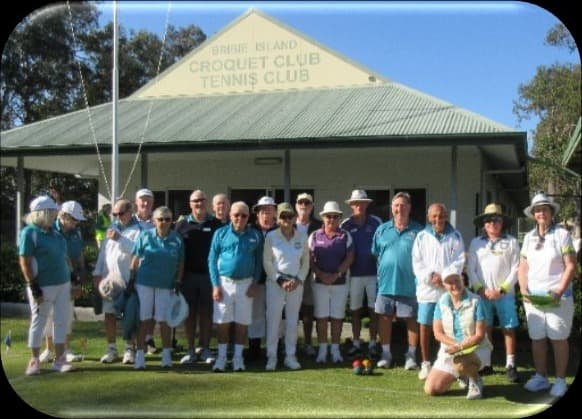
Bribie Island's doubles final goes all the way to the last hoop
Bribie Island Croquet Club's October news: a doubles final won at sheep station, Steve Bickley 8th at the GC Nationals, …
No need to sign in to play
Registered players don't need to sign in. Only visitors and overseas players must be recorded.