Croquet: Balance Training That Doesn't Feel Like Exercise
Last year, my GP mentioned the word "falls" and suggested I do something about my balance. She meant well. But the phrase "falls prevention class" made me want to lie down.
ast year, my GP mentioned the word "falls" and suggested I do something about my balance. She meant well. But the phrase "falls prevention class" made me want to lie down.

A friend suggested croquet instead. I went expecting lawn bowls with mallets. What I found was a game that quietly trains your balance while you're busy trying to get a ball through a hoop.
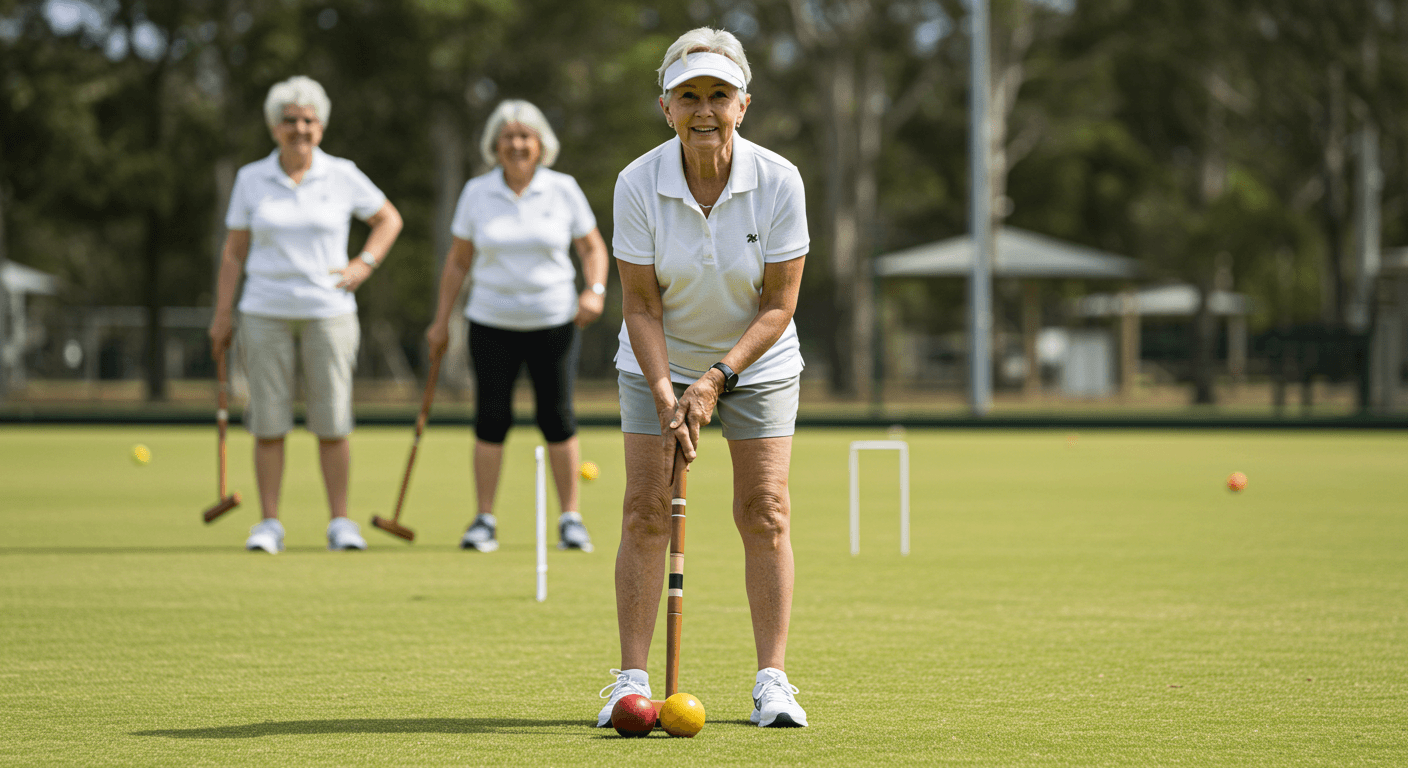
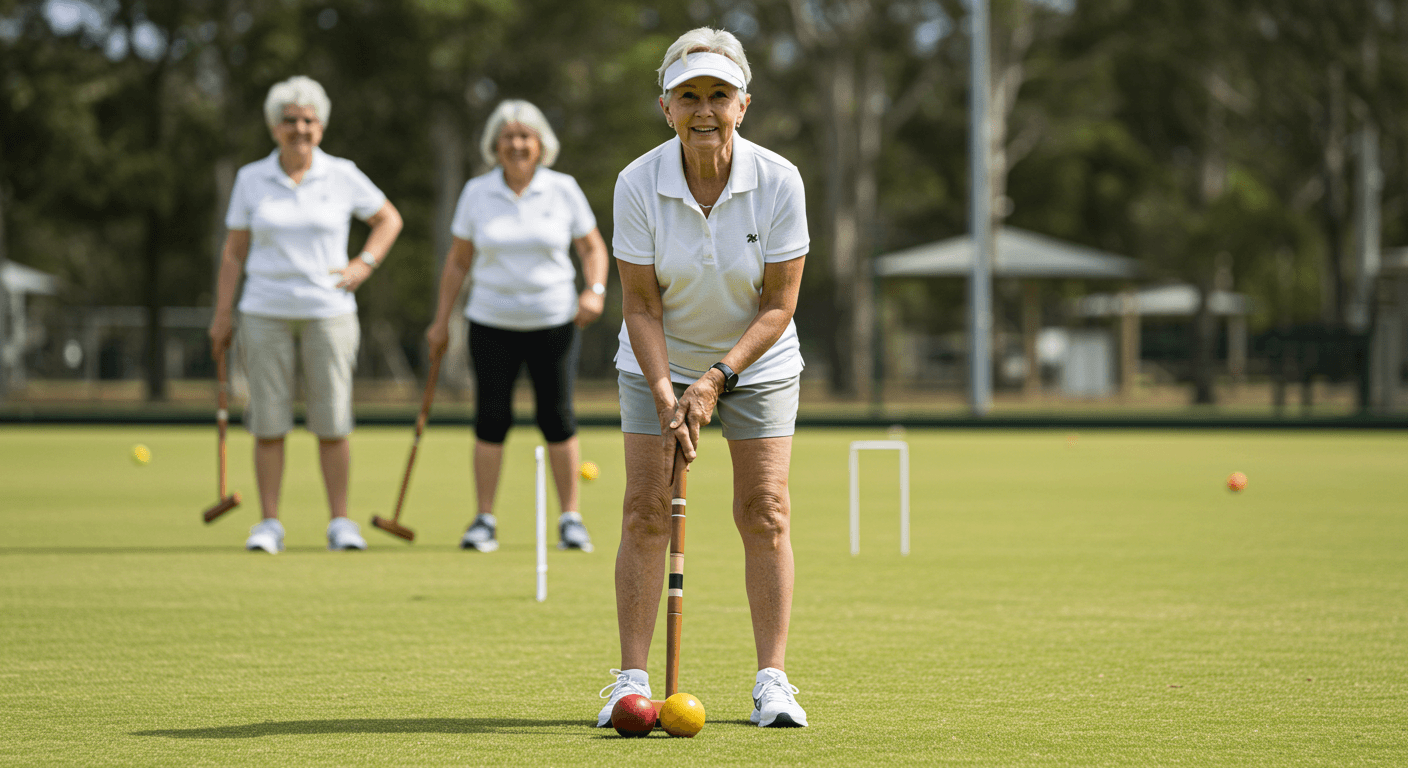
[image: The stable stance used in croquet helps improve balance for seniors. -- https://imagedelivery.net/IEMzXmjRvW0g933AN5ejrA/assetsbulletsitefiles-20c5a74c-8df0-80e5-91e6-ccaf955d4845-attachment678bc826-4213-4281-9305-36c68dafcd77image_1png/public]
The stable stance used in croquet helps improve balance for seniors. What Actually Happens to Your Balance The stance. To hit a croquet ball properly, you stand with feet shoulder-width apart, knees slightly bent, weight centred. This is exactly what physiotherapists prescribe for stability training. Every shot reinforces it. The swing. A croquet stroke is a smooth pendulum from the shoulders. To do it without wobbling, your core has to engage. Not dramatically. Just enough. Over three hours of play, that's hundreds of small core activations your body barely notices but benefits from. The walking. Here's the hidden part. Grass isn't flat. It's uneven, soft, unpredictable. Walking on it forces your ankles, legs, and brain to make constant tiny adjustments. This trains proprioception, your body's sense of where it is in space. It's the kind of real-world balance work that transfers to stepping off kerbs and navigating uneven footpaths. The Numbers One in three Australians over 65 falls each year. That rate climbs to 40 percent for people over 80. But here's the useful part: group-based balance and exercise programs cut the rate of falls by 23 to 39 per cent. Balance training has the strongest positive impact on fall risk of any exercise type. And centre-based group programs outperform exercises you do alone at home. Croquet fits the description: balance work, coordination, a regular schedule, and a group to do it with. [image: untitled -- https://imagedelivery.net/IEMzXmjRvW0g933AN5ejrA/assetsbulletsitefiles-20c5a74c-8df0-80f0-9351-c6cdaedf35f8-attachment7fccc469-1f2c-4731-a061-12750b1679aeimagepng/public] Why You Actually Stick With It The problem with most balance programs is that they feel like balance programs. You're in a room doing exercises because you're at risk. Nobody enjoys it. Most people quit after a few weeks. Croquet is different. You're playing a game. You're thinking about angles and strategy, trying to outmanoeuvre your opponent. The balance training happens in the background. Your body learns without your mind dwelling on the reason. And because it's social, because there are people to talk to and tea breaks and a reason to come back next week, you actually keep doing it. Consistency is what makes balance training work. A program you enjoy is a program you stick with. Common Questions I've already had a fall. Is croquet safe for me? Croquet is self-paced and low-impact. There's no sudden movement, no one rushing you, no risk of collision. Many players have balance concerns, that's partly why they're there. Talk to your doctor, but most find it's one of the safest activities they can do. Will it actually make a difference? The research says yes. Regular group-based balance activities reduce fall risk significantly. More importantly, you'll notice the difference yourself. The slight wobble when you turn. The uncertainty stepping off a kerb. These improve with practice. Croquet gives you that practice without thinking about it. What if I'm embarrassed about my balance? Most clubs are full of people who started for exactly the same reason. Nobody's judging. If anything, there's relief in finding an activity that works. Should I talk to my doctor first? It's worth mentioning to your GP, especially if you've had a recent fall or have a condition that affects your balance. Most doctors are happy to hear you're doing something active and social.
If you want to stay steady on your feet but can't face another exercise class, croquet might be worth a try. It's balance training you won't notice doing. And you might enjoy it. Find your nearest club at comeandtrycroquet.com →

Get HOOPLA! in your inbox
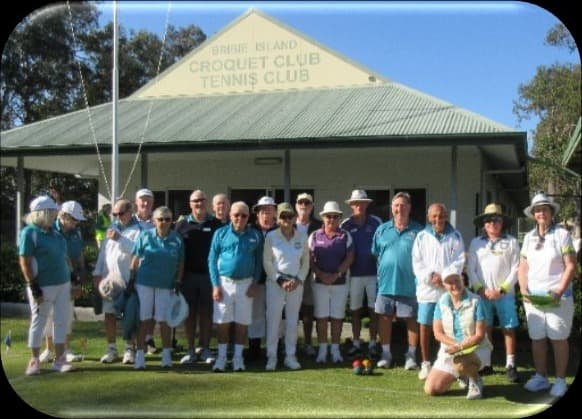
Bribie Island's doubles final goes all the way to the last hoop
Bribie Island Croquet Club's October news: a doubles final won at sheep station, Steve Bickley 8th at the GC Nationals, …
No need to sign in to play
Registered players don't need to sign in. Only visitors and overseas players must be recorded.