Benefits of Croquet For Government
Evidence supporting Queensland Government funding of croquet clubs as a preventive health intervention for seniors, drawing on 62 peer-reviewed and government sources.
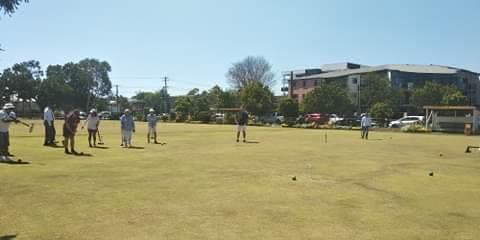
policy brief prepared in February 2026, "Croquet as a Seniors Health Intervention", argues that the Queensland Government should fund croquet clubs to help prevent falls and loneliness among people aged 65 and over.

It asks for $500,000 to $1 million a year, shared across 15 to 30 Queensland croquet clubs at $30,000 to $35,000 a club.
Falls are the leading cause of injury hospital admissions in Australia, and one in three Australians aged 65 and over falls each year. Falls led to 238,055 hospital admissions in 2022–23 across all ages and cost the health system an estimated $4.7–5 billion a year.
In the 2024 Queensland Social Survey, 6.5% of adults often felt lonely and 62.5% felt lonely at least some of the time. The brief puts the cost of loneliness to Australia at an estimated $2.7 billion a year.
A Cochrane review by Sherrington and colleagues found exercise cuts the rate of falls in older people living in the community by 23%. Programs built mainly on balance and functional exercise cut it by 24%, and programs mixing several types by 34%. A study of 6,953 mid-age Australian women by Gomes and colleagues in 2020 found those who stayed active had 40% lower Medicare and 30% lower pharmaceutical costs over three years.
The brief says croquet uses balance, coordination and grip, and that it is a club activity with a social side. It estimates 500 to 1,000 more seniors playing, 200 to 640 falls prevented a year, $2–6.4 million saved in hospital costs and a return on investment of 200% to 1,280% from falls prevention alone. Those figures rest on its own assumptions of a 40% to 64% cut in fall risk and $10,000 for each fall hospitalisation.
The brief lists a gap of its own: there are few studies of croquet and health outcomes, so it relies on studies of group exercise and lawn bowls.
As at February 2026, the brief named three funding sources: the Gambling Community Benefit Fund, which offers more than $60 million a year, the Minor Infrastructure Program and Age-Friendly Community grants.

Get HOOPLA! in your inbox
Claire Warriner awarded 'real' Player of the Series
Headland-Buderim's Ross Rillie (Capt) presented Claire Warriner (Windsor) with the 'real' Player of the Series trophy at…
McIlwraith Blue wraps up Division 3 Pennants against Eildon
McIlwraith Blue finished the Division 3 Pennants competition with a win on games against Eildon Croquet Club. The real w…